Here’s why it’s essential to get rid of as many bagworms as possible.
If you’ve seen unusual little “pinecone-like” bags hanging from your evergreens, you may be dealing with bagworms, one of the most destructive landscape pests in Eastern North Carolina. Bagworms feed aggressively on arborvitae, junipers, Leylands, cedars, and many other shrubs, often causing thinning, browning, and in severe cases, complete plant loss. Early identification and proper treatment timing make a major difference in controlling these pests before they spread.
This guide explains how to identify bagworms, when to treat them, and how homeowners can protect their landscape from ongoing damage.
What exactly are bagworms?
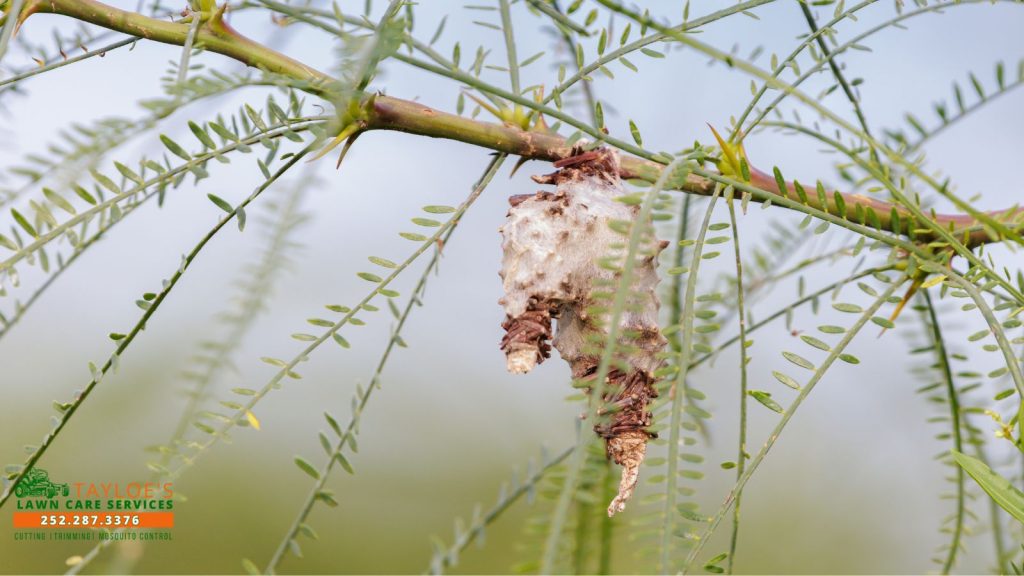
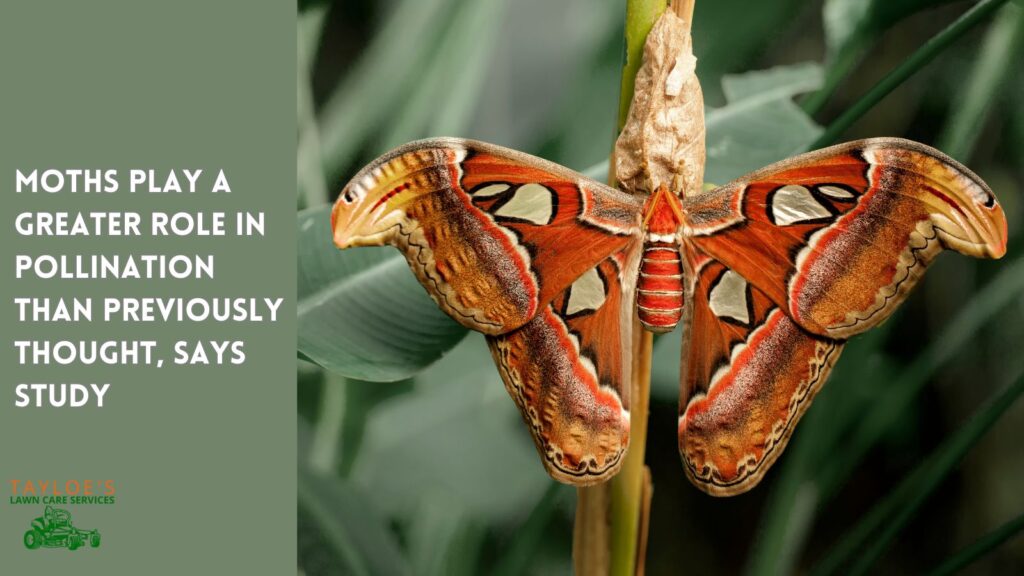
Bagworms are the larvae of a moth that construct protective “bags” from silk and pieces of the host plant’s foliage. These bags camouflage the pests so well that most homeowners don’t notice them until damage becomes severe.
What the bags look like
- Shaped like small pinecones, teardrops, or leaf bundles
- Typically ½ inch to 2 inches long depending on age
- Hang from branches like ornaments
- Blend perfectly into evergreens
The caterpillars live inside these bags and feed on surrounding foliage until they pupate into adult moths.
Why bagworms cause such heavy damage
Bagworms feed continuously once they hatch, stripping foliage and weakening the plant. Evergreens don’t regenerate foliage as easily as deciduous plants, which makes the damage especially harmful.
Uncontrolled infestations can lead to:
- Browning tips and thinning branches
- Bare spots that do not recover
- Entire shrubs dying within one or two seasons
Arborvitae and Leyland cypress are particularly vulnerable, and repeated infestations can devastate a mature planting.
When bagworms appear in Eastern NC
Understanding timing is the key to effective treatment.
Seasonal activity
- Eggs overwinter inside old bags attached to branches.
- Caterpillars hatch in late May through June in Eastern NC.
- Young larvae balloon on silk threads, spreading between plants.
- Feeding continues through summer until the caterpillars seal their bags and pupate.
Once bags are sealed (typically mid-to-late summer), chemical treatments are far less effective.
How to identify bagworm damage
Bagworms often go unnoticed until symptoms appear.
Early signs
- Small brown tips on evergreen foliage
- Thinning areas where foliage is being eaten
- Tiny moving “bags” dangling from branches
Advanced signs
- Branches turning brown or bare
- Entire sections dying
- Heavy bag clusters weighing down limbs
If you see numerous small bags early in the season, immediate action is important.
How to treat bagworms effectively
Bagworm control depends on catching them in their early larval stage. Once the bags are mature and sealed, chemical treatments will not penetrate.
Best treatment window
The most effective time to treat is late May through early July, while the caterpillars are still young and actively feeding.
Best treatment methods
- Use products containing Bacillus thuringiensis (Bt) for young caterpillars.
- Use spinosad or pyrethroid-based treatments for moderate infestations.
- Spray thoroughly to coat all foliage, including inner branches.
When hand removal is best
If you catch the infestation late in the season (August through winter), hand-picking bags is the only effective method.
Remove and destroy the bags to prevent thousands of eggs from hatching next season.
How to prevent bagworms long-term
Preventing bagworms is far easier than treating a major infestation.
Helpful prevention practices
- Inspect vulnerable plants every spring and early summer.
- Apply preventive sprays in late May if you’ve had bagworms before.
- Keep shrubs healthy through proper watering and fertilizing.
- Reduce plant stress, which makes them less susceptible to pests.
Because bagworms spread by ballooning on silk threads, even well-maintained landscapes can become re-infested without annual monitoring.
Which plants bagworms prefer
Bagworms feed on over 100 species of plants, but they favor evergreens with soft or scale-like foliage.
Highly susceptible plants
- Arborvitae
- Leyland cypress
- Juniper
- Cedar
- Spruce
Occasionally affected plants
- Maple
- Sycamore
- Oak
- Rose bushes
Even if only one shrub shows symptoms, inspect surrounding plants because larvae move quickly.
When to call a professional
Homeowners can handle light to moderate infestations, but professional help may be needed when:
- Large, mature plants are heavily infested
- Clusters of hundreds of bags are visible
- Damage spans multiple seasons
- BT and spinosad treatments aren’t effective
- The infestation is spreading between neighboring properties
A professional-grade treatment may save shrubs that would otherwise decline.

The Takeaway: Treating bagworms early protects your landscape from serious damage
Bagworms can cause rapid and permanent damage to evergreens in Eastern North Carolina, but catching them early and treating during the correct window makes control far easier. By monitoring your landscape in late spring, using timely treatments, and removing bags before winter, you can protect your shrubs from long-term decline.
If you are interested in mosquito control or exterior spraying service, call Tayloe’s Lawn Care Services, LLC today at 252.287.3376.
Related Reading:
Author Profile

- Randy Tayloe is the COO of Tayloe's Lawn Care Service, LLC. He is a certified custom applicator, recognized by the North Carolina Department of Agriculture Pesticide Division. A native of Bertie County, NC, and graduate of Bertie High School, he wants to beautify his home county - one yard at a time.
Latest entries
 Lawn CareOctober 5, 2026Signs of lawn disease in NC
- Lawn CareSeptember 29, 2026Lawn care disasters to avoid (especially in our climate)
- Pest ControlSeptember 22, 2026How long do mosquitoes stay active in NC?
- Pest ControlSeptember 16, 2026Getting rid of armyworms