Last Updated on: 9th December 2025, 02:53 pm
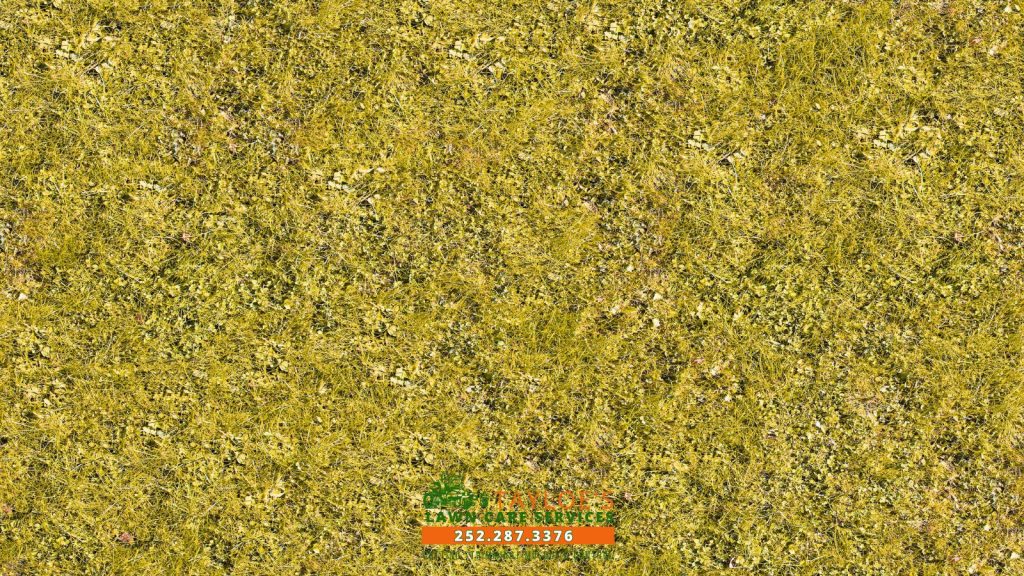
Why your lawn turns yellow from heat stress.
It’s a common — and frustrating — question we get every summer: “Why does my grass turn yellow in July?” The honest answer is that yellowing isn’t from one single cause. By mid-summer here in Eastern North Carolina, lawns face a combination of heat, humidity, shallow rooting, nutrient stress, compacted soil, and drought cycles. These stressors make turf lose its green tone even when homeowners are trying hard to care for it. The good news is that once you understand why the yellowing happens, you can stop it, reverse it, and strengthen the lawn to tolerate summer heat more gracefully going forward.
Heat stress and shallow roots are the biggest culprits
Most July yellowing begins with shallow watering habits earlier in the season. When homeowners water lightly or every day, the water never penetrates deeply. Roots stay near the surface. Then July arrives, the soil gets hot, and those shallow roots dry out fast. The grass tries to protect itself and the green fades to a tired straw-yellow tone.
The solution isn’t to water more often — it’s to water more deeply. When moisture penetrates six to eight inches into the soil, the grass begins pushing its roots downward, where they are insulated from heat spikes.
Fertilizing at the wrong time causes more harm than homeowners realize
Another common reason lawns turn yellow in July is fertilizer stress. When turf receives nitrogen during high heat, it tries to produce tender new growth that it cannot support. Those weak blades quickly burn and then turn yellow.
A better approach is timing fertilization to match the lawn’s natural growth pattern. Warm-season grasses prefer feedings earlier in summer and again in late summer. Mid-July, when daytime temperatures consistently exceed the high 80s, is the worst possible moment to apply fertilizer. If the lawn needs nutrients, organic sources or light iron corrections are far safer than pushing nitrogen.
Drought wilt looks like disease, but it’s simply dehydration
Yellowing after a hot spell — especially when the lawn seemed fine the week before — is usually drought wilt. The turf hasn’t died, but it is signaling stress. You’ll notice the crunch under your foot when you walk, and footprints might linger instead of springing back. Lawns can recover from drought wilt, but they need deep irrigation and rest, not fertilizer, not mowing, and certainly not more stress.
Compacted soil starves grass of oxygen and nutrients
Many yellow lawns are suffering from compaction more than anything else. When our clay-based soils tighten, water runs off instead of soaking in. Roots grow horizontally, not downward, and turf becomes weak. A compacted lawn in July will yellow no matter how much fertilizer or irrigation is applied because the root zone simply isn’t functioning.
Core aeration, performed at the right time of year for the turf species, is the long-term solution. This relieves the strangling effect of compaction and allows moisture and nutrients to penetrate again.
Nutrient deficiencies don’t mean “dump fertilizer”
Yellowing is sometimes blamed on nutrient deficiencies, but again, July is not the month for aggressive feeding. One of the clearest signs of a nutrient imbalance is when the lawn greens up after rainfall, even though irrigation was unchanged. Rainwater temporarily supports nutrient uptake where heat had slowed it down.
In these cases, mild supplements like compost topdressing or iron application bring steady improvement without forcing stressed turf. Soil testing, not guesswork, is the responsible path forward.
Summer disease pressures escalate when conditions are wrong
Here in Eastern NC, high humidity plus nighttime moisture invites fungal disease. Many homeowners unknowingly create those conditions by watering in the evening. The lawn stays wet overnight, and disease organisms thrive.
Morning watering avoids this risk because foliage dries quickly after sunrise. Good airflow also makes a difference — even trimming shrubs around lawn edges reduces moisture lingering just above the turf canopy.
Mowing too short exposes the turf to direct sun, so the grass turns yellow
When homeowners mow aggressively in July, the turf crown — where new leaves emerge — is exposed to heat. Those crowns scorch quickly and the lawn yellows. Each grass species has a safe height range, and raising the mower slightly in summer helps protect color.

Temporary heat dormancy is normal — and recoverable
Some yellowing isn’t a sign of failure at all. Warm-season grasses enter a sort of “heat stall” during stretches of extreme weather. During this period, their energy goes into survival rather than color. The lawn will green again once stress eases, especially if roots have been encouraged to grow deep and watering is done properly.
So what should a homeowner do next — right now?
- Water deeply once or twice a week — not daily.
- Avoid fertilizing in the hottest weeks.
- Raise mowing height slightly to shade the crowns.
- Check for compaction and plan for aeration.
- Skip irrigation when rain has already provided moisture.
Most yellowing reverses within a few weeks once stress is managed instead of multiplying.

Yellow grass in July is fixable when you respond to the cause, not the symptom
Grass turns yellow in July because of shallow roots, fertilizer stress, compaction, drought, heat dormancy, and improper watering habits. By watering deeply, mowing at the correct height, timing fertilization wisely, and supporting the soil rather than forcing top growth, you allow turf to recover and strengthen. Most July yellowing isn’t permanent — it’s a stress response, and with gentle corrective care, the lawn bounces back greener, thicker, and tougher.
Author Profile

- Randy Tayloe is the COO of Tayloe's Lawn Care Service, LLC. He is a certified custom applicator, recognized by the North Carolina Department of Agriculture Pesticide Division. A native of Bertie County, NC, and graduate of Bertie High School, he wants to beautify his home county - one yard at a time.