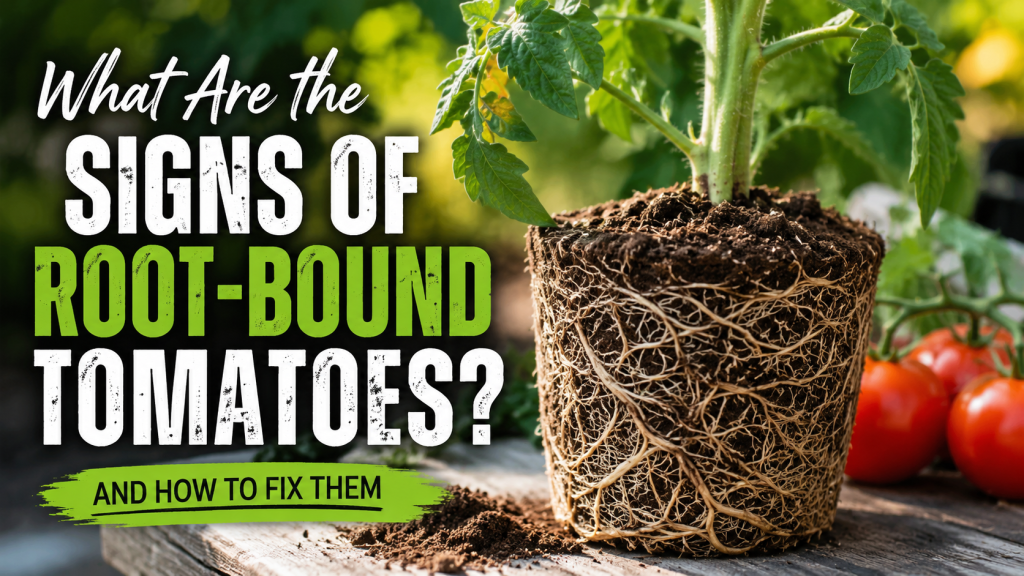
Here’s how to identify and save root-bound tomatoes.
The signs of root-bound tomatoes can look a lot like underwatering, poor soil, or a plant that simply isn’t growing well. The tomato may wilt frequently, stop adding new growth, or need water again only a few hours after you watered it.
Sometimes the problem isn’t above the soil at all. It’s right inside the container.
A tomato becomes root-bound when its roots have filled most or all of the available growing space. Once the roots reach the sides and bottom of the pot, they begin circling one another because they have nowhere else to go.
At that point, adding more fertilizer or watering more often may not solve the problem. The plant needs enough room for its roots to expand, absorb water, take up nutrients, and support continued top growth.
Let’s look at the signs to watch for and what you can do about them.
Key Takeaways
- Root-bound tomatoes show signs like frequent wilting, stunted growth, and yellowing leaves due to limited root space.
- Check for circling roots and dense root balls as clear indicators of being root-bound.
- Transplanting to a larger container or the garden and loosening roots can alleviate the root-bound condition.
- Water thoroughly after transplanting and allow time for the plant to recover its root system.
- Identify root-bound issues early to prevent serious problems; consider other causes for tomato distress before repotting.
The Most Obvious Sign: Circling Roots
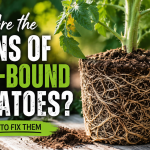
The clearest way to tell whether a tomato is root-bound is to look at the root ball.
Carefully slide the plant out of its pot while supporting the stem and soil. If the roots form a thick white or tan web around the outside of the soil, the plant is becoming root-bound.
A severely root-bound tomato may have roots circling the bottom of the container several times. There may be so many roots that very little potting mix is visible.
You may also notice roots:
- Growing through the drainage holes
- Circling tightly around the inside of the pot
- Forming a dense mat at the bottom
- Holding the root ball in the exact shape of the container
- Crowding out much of the original potting mix
A healthy transplant should have a developed root system, but there’s a difference between well-rooted and trapped.
NC State Extension recommends choosing sturdy, healthy vegetable transplants with well-developed root systems and handling their roots carefully during planting. Its vegetable gardening guidance also stresses the importance of preparing the planting site and reducing stress when transplants are moved into the garden.
The Plant Wilts Soon After Watering
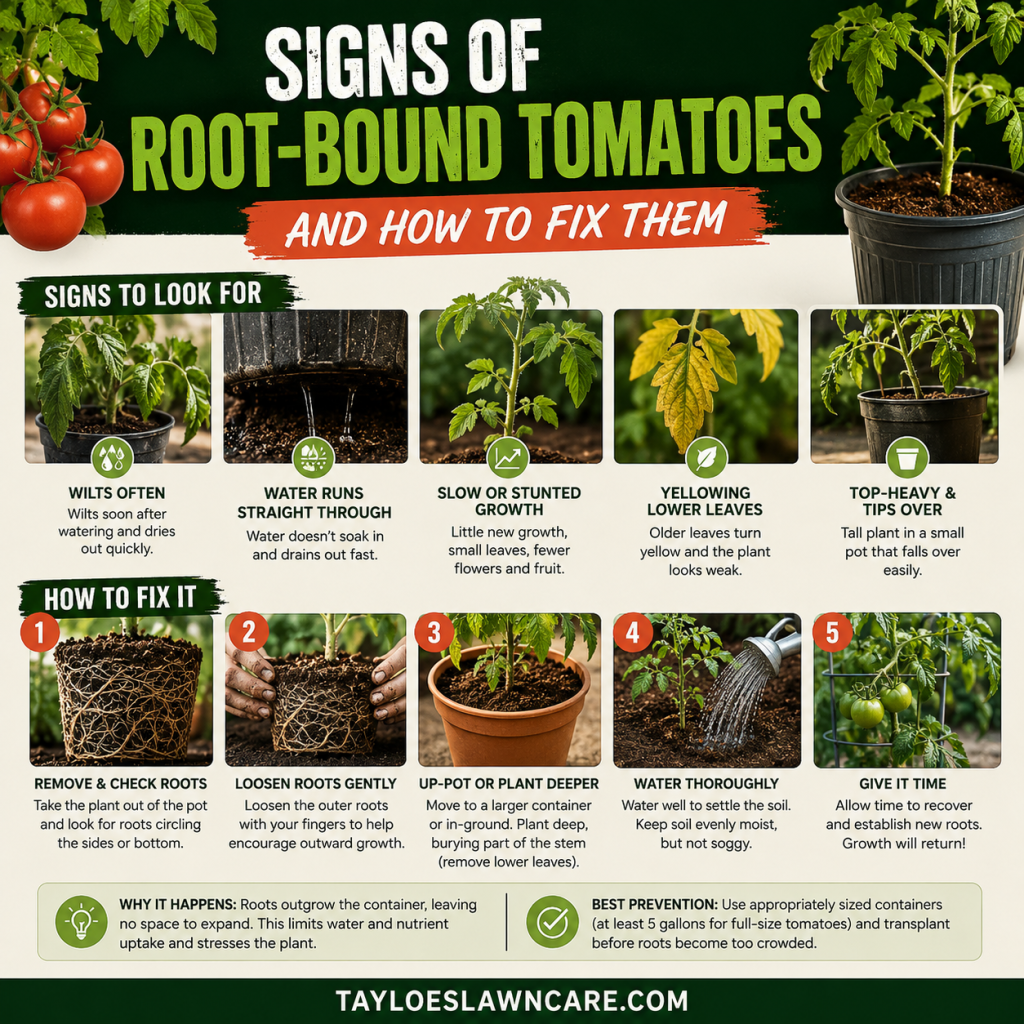
Frequent wilting is one of the most common signs of a root-bound tomato.
A tomato in a small container may look fine early in the morning and wilt badly by afternoon. You water it, the plant perks up, and then the same thing happens again the next day—or even a few hours later.
That doesn’t always mean you’re failing to give it enough water.
A crowded root ball contains less usable potting mix. Potting mix acts as a reservoir, holding water around the roots. When roots occupy nearly the entire container, there’s less material available to store moisture.
The plant may use up the limited water quickly, especially during hot, sunny weather.
Container-grown plants naturally need closer attention to moisture than plants growing in the ground. NC State Extension notes that container material, size, drainage, sun exposure, and plant selection all affect how frequently a container needs to be watered. Its guide to growing plants in containers explains that proper container size and moisture management are essential to healthy plant growth.
Tomatoes are heavy water users once they begin growing rapidly. Putting a vigorous tomato plant in a small pot is like asking a large family to live out of one kitchen cabinet. It may work briefly, but they’re going to run out of room.
Water Runs Straight Through the Pot
Another warning sign is water that seems to run through the container almost immediately.
You water the plant, and instead of soaking evenly into the potting mix, much of the water pours out through the drainage holes.
This may happen because the root ball has become so dense that water follows channels around it rather than moving evenly through it. A dry, compacted root ball can also be difficult to rewet.
The outside of the soil may appear damp while the center remains dry. When that happens, slowly water the plant in stages instead of dumping a large amount into the pot all at once. Give the first application time to soak in, then water again.
Bottom-watering for a short period may help rehydrate a very dry root ball before transplanting, but don’t leave a tomato sitting indefinitely in standing water. Tomato roots need oxygen as well as moisture.
Growth Slows or Stops
A tomato plant may continue living in a crowded container without putting on much new growth.
You may notice:
- Shorter spaces between leaves
- Little or no increase in height
- Small new leaves
- Thin stems
- Fewer flowers
- Flowers that drop without setting fruit
- Fruit development that slows
Roots and shoots depend on one another.
Leaves produce the carbohydrates that fuel plant growth, while the roots supply water and mineral nutrients. When root growth is severely restricted, the root system may struggle to support the plant’s increasing needs.
The tomato may stay alive, but it can’t perform the way it would with adequate growing space.
That’s especially important with indeterminate tomatoes, which are genetically programmed to keep growing, flowering, and producing throughout the season. They need enough root volume to support all that top growth.
Lower Leaves May Yellow
Yellow leaves can have many causes, so yellowing alone doesn’t prove that a tomato is root-bound.
Still, a crowded root system can contribute to yellowing when the plant can’t take up enough water or nutrients to support all its foliage.
The oldest leaves near the bottom of the plant may turn pale first. Growth may look generally weak, and the plant may fail to respond normally to fertilizer.
This is where people sometimes make the problem worse.
They see yellow leaves and add more fertilizer. If the roots are badly crowded, adding extra fertilizer doesn’t create more space or improve the root system. Too much fertilizer can also damage roots or encourage excessive leafy growth without improving fruit production.
NC State’s tomato growing recommendations warn that excessive nitrogen can produce heavy foliage at the expense of fruiting. The goal is balanced growth, not simply pushing the plant with more fertilizer every time it looks unhappy.
The Container Tips Over Easily
Sometimes the plant tells you it has outgrown its pot by becoming top-heavy.
A tomato may grow several feet tall while still sitting in a small nursery container. Even with a stake, the container may blow over whenever the wind picks up.
That’s partly a stability problem, but it’s also a clue that the amount of growth aboveground is no longer in proportion to the growing space belowground.
A larger container provides more root volume, holds more moisture, and gives the plant a wider, heavier base.
It still needs proper staking or caging, but you won’t be trying to support a full-sized tomato plant in a pot meant for a young transplant.
How to Fix a Root-Bound Tomato
The most effective remedy is usually simple: Give the tomato more growing space.
That may mean planting it in the garden, moving it to a raised bed, or transplanting it into a larger container.
Water Before Transplanting
Water the tomato before removing it from the old pot.
A moist root ball usually holds together better than one that is bone dry. The plant will also begin the move with some available moisture, which can reduce transplant stress.
Don’t soak it until the soil is muddy and falling apart. You want the root ball evenly moist and manageable.
Move It Into Adequate Space
For an in-ground tomato, prepare the planting area before taking the plant out of its container. That keeps the roots from sitting exposed while you dig.
If the tomato will remain in a container, don’t move it into a pot that is only an inch wider. A rapidly growing tomato will fill that small amount of extra room quickly.
Choose a container large enough to carry the plant through the season, with several unobstructed drainage holes. Tomatoes need consistent moisture, but their roots shouldn’t remain waterlogged.
NC State Extension recommends full sun, moist but well-drained soil, and consistent watering for tomatoes. Those same basic needs apply whether the plant is growing in a garden or a properly sized container.
Loosen Tightly Circling Roots Gently
If the roots are only beginning to circle, you may not need to do much. Planting the tomato into loose soil may be enough for the new roots to begin growing outward.
If the outside of the root ball is covered in a tight, matted layer, use your fingers to gently loosen some of the roots around the bottom and sides.
The goal isn’t to tear the root system apart or remove all the soil. You’re simply encouraging a few of those circling roots to point outward into the new soil.
A tomato can recover from some root disturbance, but unnecessary damage creates additional stress. Work gently and keep the roots from drying out.
Plant at the Proper Depth
Tomatoes have a useful trait: buried portions of the stem can produce additional roots.
A tall or leggy transplant can often be planted deeper than it sat in the original pot, provided the lower leaves are removed before that portion of stem is covered. NC State also describes a trench-planting method for tall tomato transplants, in which the root ball and part of the bare stem are placed horizontally beneath the soil.
This can help establish a larger root system, but don’t bury foliage. Remove the leaves that would otherwise end up below the soil line.
Water Thoroughly After Planting
After transplanting, water deeply enough to settle the soil around the root ball and remove large air pockets.
Keep the soil consistently moist while the tomato establishes new roots, but don’t assume that more water is always better. Saturated soil can limit oxygen around the roots and create a different set of problems.
The goal is even moisture.
A layer of mulch around an in-ground tomato can help reduce evaporation and limit rapid swings between very wet and very dry soil. Keep the mulch slightly away from the stem rather than piling it directly against the plant.
Give the Plant Time to Recover
A root-bound tomato may not begin growing vigorously the day after it’s transplanted.
It has to redirect energy into new root growth and adjust to its new environment. Mild wilting immediately after transplanting can happen, especially in warm or windy conditions.
Transplanting in the evening or on a cloudy day can reduce stress. NC State recommends avoiding extreme weather when moving vegetable transplants and allowing young plants to harden off gradually before they’re planted outdoors.
Once the roots begin growing into the surrounding soil, the plant should become easier to keep watered and may resume stronger top growth.
Make Sure Root-Bound Is Really the Problem
Several tomato problems can cause wilting, yellow leaves, curling foliage, or stunted growth.
Those symptoms can also come from:
- Too little or too much water
- Excessive heat
- Transplant shock
- Root disease
- Root-knot nematodes
- Herbicide injury
- Nutrient problems
- Viral or fungal disease
That’s why checking the root ball matters.
A root-bound tomato has a visible physical problem: too many roots occupying too little space. If the roots aren’t circling or crowded, look for another cause before repotting the plant unnecessarily.
For example, root-knot nematodes produce knots or swellings on tomato roots rather than the smooth, circling pattern caused by a tight container. NC State’s guide to root-knot nematodes in tomatoes can help gardeners recognize the difference.
Don’t Wait Until the Root-Bound Tomato Plant Is in Serious Trouble
It’s easier to correct a slightly crowded tomato than one that has spent weeks struggling in a tiny pot.
Check young plants before buying them. A few healthy roots near the outside of the soil are normal. A solid mass of circling roots means the transplant has been sitting in that container too long.
If you already have the plant, don’t panic.
Tomatoes are vigorous growers, and many root-bound plants recover well once they’re given adequate space, consistent moisture, and a little time to establish.
The important thing is recognizing what the plant is telling you.
If the tomato wilts constantly, dries out unusually fast, stops growing, and has roots wrapped tightly around the inside of its pot, it probably doesn’t need another quick drink or another scoop of fertilizer.
It needs room.
Give the roots somewhere to go, and the rest of the plant usually has a much better chance to do what tomatoes do best: grow, flower, and produce.
Related Reading:
Author Profile

- Deborah Tayloe is the CEO and co-founder of Tayloe's Lawn Care Services, LLC. She has a B.S.Ed and holds certificates in soil and water management and herbology from accredited programs.