Here are our favorite fall vegetables for the northeastern NC region.
If you’ve been wondering what fall vegetables to grow in NE NC, you’ll be happy to learn that our climate gives us one of the longest autumn growing windows of any region on the East Coast. While summer heat can limit some crops, fall conditions — warm soil, mild daytime temperatures, and lower humidity — allow leafy greens, root crops, and cole crops to thrive. The result is a high-yield, low-maintenance growing season that rewards homeowners with flavorful, nutritious produce heading into winter.
This guide covers the top fall vegetables that perform well in Northeastern North Carolina, when to plant them, and how to help them thrive in your garden or raised beds.
Why fall vegetables thrive in Eastern NC
Even though we associate gardens with spring and summer, fall offers ideal growing conditions:
- Soil is warm enough to stimulate root growth
- Humidity decreases, reducing disease pressure
- Weed growth slows dramatically
- We can water less because evaporation is lower
- Insects are less aggressive
- Cool nights improve crop flavor
Most homeowners find that fall vegetable beds produce steadily with less effort than summer gardens.
When to plant fall vegetables in Northeastern NC
Timing matters because different vegetables tolerate different temperature ranges.
- Early September: Cool-tolerant leafy greens and fast root crops
- Mid–Late September: Broccoli, cabbage, Brussels sprouts, kale, and collards
- October: Spinach and radishes continue strong; onions can be planted for early spring harvest
Because frost typically occurs later here than in many states, we often get 8–12 full productive weeks before cold weather slows growth.
Leafy greens — reliable and highly productive
Leafy vegetables shine in fall because warm soil helps them establish quickly and cooler nights prevent bitterness.
Lettuce
- Best planted mid to late September
- Loose-leaf varieties outperform head-forming types in humidity
- Harvest steadily as outer leaves mature
Spinach
- One of the most cold-hardy crops
- Plant late September to October
- Prefers consistent moisture but not saturation
Kale
- Near bulletproof in our climate
- Can survive light frost
- Sweetens in flavor as temperatures cool
Collards
- A Southern favorite
- Very tolerant of inconsistent watering
- Continues production through winter
Leafy crops also work well in raised beds and containers if space is tight.
Root vegetables — ideal for our fall weather
Root crops thrive in warm soil at planting time and develop best flavor when temperatures cool.
Carrots
- Plant early September
- Loose, well-amended soil helps root formation
- Germination improves with steady moisture
Beets
- Plant early to mid-September
- Leaves are edible and flavorful
- Excellent for storage after harvest
Radishes
- Fastest crop you can grow — ready in 25–35 days
- Plant several rounds for continuous harvest
Root vegetables are a great choice for kids and first-time gardeners because the growth is visible and rewarding.
Brassicas — the stars of fall gardening
Brassicas (also called cole crops) absolutely love fall temperatures.
Broccoli
- Plant mid September
- Prefers full sun and consistent moisture
- Produces heads and side shoots
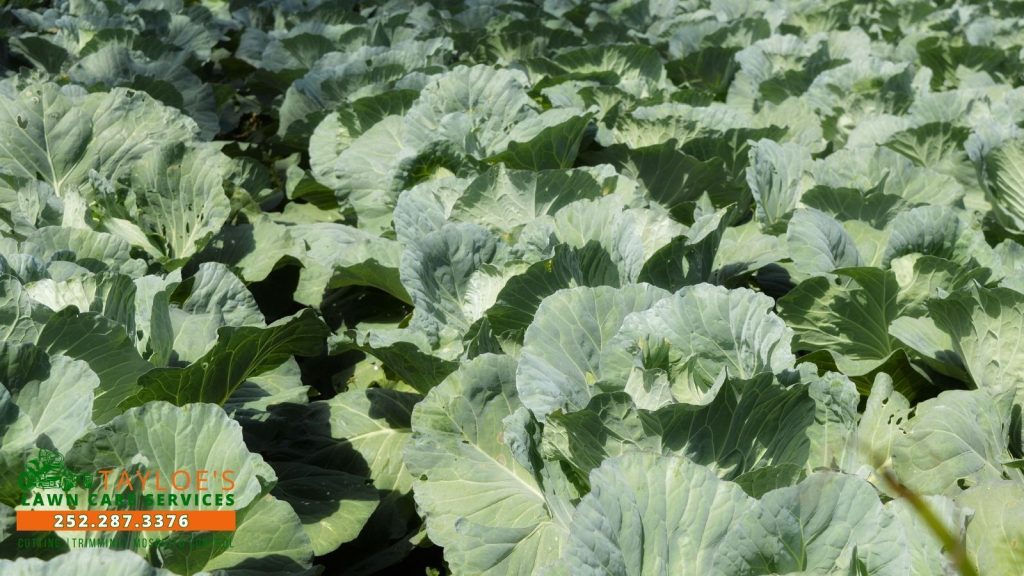
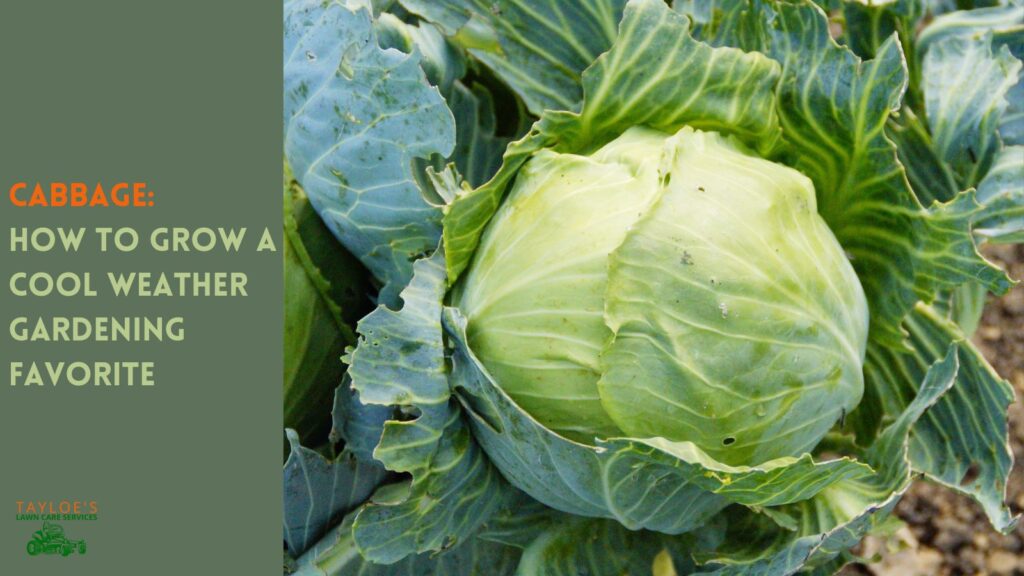
Cabbage
- Plant mid September
- Important to water deeply after transplanting
- Cabbage heads firm best during cool nights
Brussels Sprouts
- Best planted mid September
- Slow-growing but resilient
- Improves flavor after light frost
Cauliflower
- Slightly more temperamental than broccoli
- Responds best to mulch and steady moisture
- Fall offers perfect growing conditions
Because brassicas enjoy soil that stays cool around their roots, mulching helps them thrive in warm early fall weather.
Onions and garlic — plant in fall, harvest later
One of the biggest advantages of gardening in NE NC is the ability to start long-season crops in fall.
Garlic
- Plant in October–November
- Harvest early summer
- Requires minimal attention once mulched
Onions (sets or transplants)
- Plant October
- Grow through winter into spring
- Excellent for raised beds
These crops take up little space and require minimal care after planting.
Herbs that continue producing through fall
Some herbs slow growth in summer heat but return strong in fall.
Top performers:
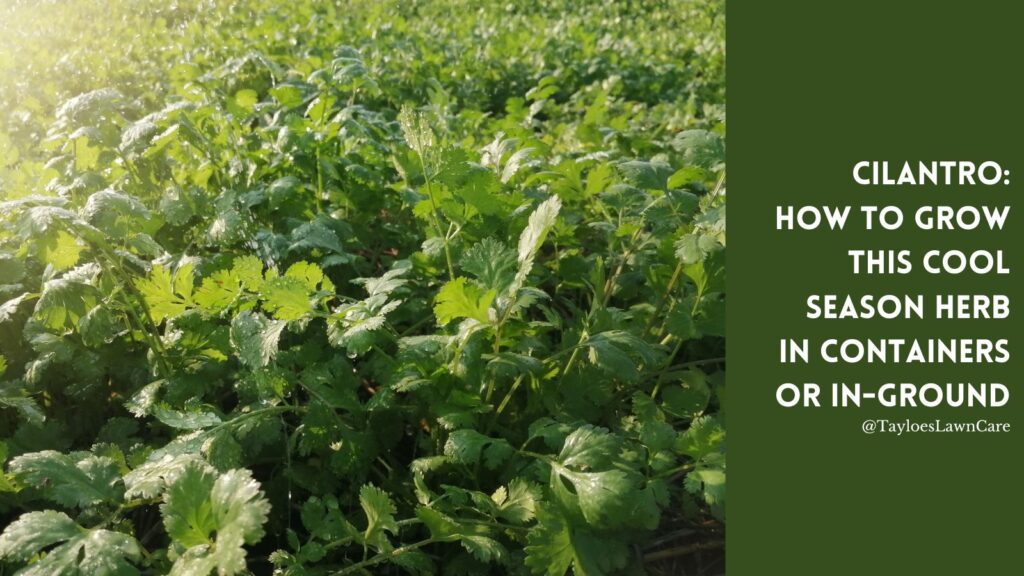
- Parsley
- Cilantro
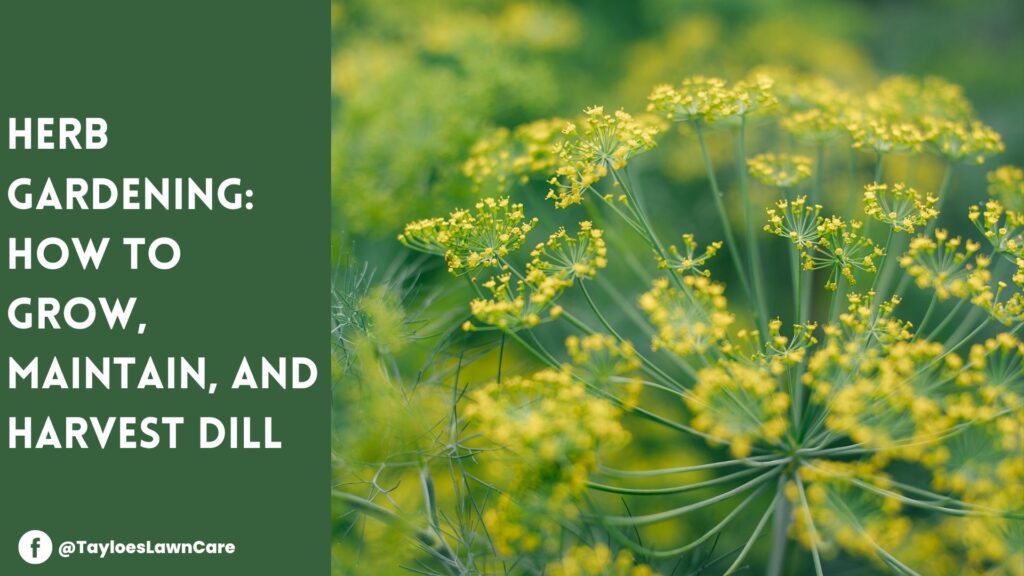
- Dill
- Chives
- Mint (contained in a pot)
These herbs are rarely affected by pests in autumn and require very little maintenance.
Soil preparation tips for fall beds
Good soil means better yields with less effort. Fall beds don’t usually need as much amendment as spring beds, but a few simple steps go a long way.
What to do:
- Remove weeds and debris
- Add compost to improve structure
- Lightly loosen soil to improve drainage
- Mulch after planting
- Avoid overfertilizing (especially nitrogen-heavy blends)
Fall vegetables prefer soil that drains well but retains moisture near roots.
Watering guidance for fall vegetable gardens
Fall watering is simpler than summer watering because evaporation is lower.
General rule:
- Water deeply 1–2 times per week
- Avoid sprinkling leaves late in the day
- Drip irrigation or soaker hoses work best
Newly planted seeds require moisture near the surface until roots establish, so mist lightly during early germination.
Managing pests in fall
While fall pests are far fewer than summer pests, you may still encounter:
- Cabbage worms
- Caterpillars
- Aphids
These are easiest to manage in fall because:
- They reproduce more slowly
- Plants are not heat stressed
- Leaves are denser and healthier
Hand removal and targeted organic sprays are often enough. Nets or lightweight fabric covers prevent moths from laying eggs in brassica crops.
Mulching your fall garden makes a major difference
Mulch helps with:
- Weed suppression
- Moisture retention
- Soil temperature stability
Apply 2–3 inches around plants (but not against stems) using pine straw, shredded bark, or leaf mold.
Spacing matters more in fall than most homeowners think
Because fall vegetables grow dense foliage, spacing reduces disease pressure and supports airflow.
Examples:
- Lettuce: 8–10 inches apart
- Kale: 12–18 inches
- Broccoli: 18–24 inches
- Cabbage: 18–24 inches
- Carrots: Thin seedlings to 2–3 inches
Good spacing produces larger, healthier plants with fewer pest issues.
Why raised beds are perfect for fall vegetables
Raised beds:
- Warm quickly in early fall
- Drain more consistently
- Reduce weed pressure
- Make spacing easier
They’re also easier to cover if frost comes early.
Related Reading:

Fall vegetable gardening in NE NC is productive, flavorful, and easier than summer gardening
When you choose the right fall vegetables to grow in NE NC — leafy greens, root crops, brassicas, onions, and cold-tolerant herbs — you’ll enjoy a highly productive season with fewer weeds, fewer pests, and reduced watering needs. With simple soil preparation, steady spacing, mulching, and deep watering, your fall garden will deliver steady harvests from September through December — and in some cases even into winter.
Need a hand with your fall lawn and garden needs? Call or text Tayloe’s Lawn Care Services, LLC, at 252.287.3376.
Author Profile

- Deborah Tayloe is the CEO and co-founder of Tayloe's Lawn Care Services, LLC. She has a B.S.Ed and holds certificates in soil and water management and herbology from accredited programs.
Latest entries
 Trees and ShrubsOctober 19, 2026Soft Touch Holly: A compact evergreen for seasonless greenery
- GardeningOctober 12, 2026When can I plant knockout roses in eastern North Carolina?
- Herb GardenSeptember 1, 2026What fall vegetables should you grow in NE NC?
- GardeningAugust 25, 2026Best low-maintenance landscaping ideas for NC