Following the right weed & feed schedule is a lawn care game-changer.
The most effective weed and feed schedule for Northeastern NC is different from many other parts of the country because our region warms up early, stays warm late, and supports weed germination far sooner than homeowners expect. Timing determines whether your lawn becomes thick and healthy—or thin and taken over by crabgrass, chickweed, and spurge. Once you understand how our soil temperatures dictate weed growth and turf health, it becomes much easier to apply products at the correct time and strengthen your lawn through every season.
Most weed and feed problems happen for the same reason: products are applied too early, too late, or during the wrong growth stage for your turf type. This guide walks you through the complete Northeastern NC schedule so you know exactly what to apply and when to apply it.
Why the weed and feed schedule really matters in Northeastern NC
Our local climate includes mild winters, long humid summers, and early spring warm-ups. Because soil temperatures rise quickly, weeds such as crabgrass start germinating far earlier than most homeowners anticipate. At the same time, warm-season grasses like Bermuda, Zoysia, and Centipede remain dormant well into early spring, meaning they cannot safely take fertilizer during the early weeks of the season.
When weed and feed products are applied at the wrong time, they can:
- Cause turf stress
- Burn tips or roots
- Fail to control emerging weeds
- Trigger summer fungus
- Disrupt warm-season dormancy cycles
The key to success is matching each treatment to soil temperature, turf type, and seasonal growth patterns.
Quick-glance weed and feed schedule for Northeastern NC
This table shows the overall structure before we break it down:
| Season | Weed control focus | Feeding focus |
|---|---|---|
| Late winter (Feb) | Apply pre-emergent | Skip fertilizing |
| Early spring (Mar–Apr) | Treat broadleaf weeds | Light feeding for fescue only |
| Late spring (May) | Apply second pre-emergent | First feeding for warm-season lawns |
| Summer (Jun–Aug) | Spot-treat tough weeds | Feed warm-season lawns |
| Fall (Sep–Oct) | Fall broadleaf control | Feed cool-season lawns |
| Late fall (Nov) | Apply winter pre-emergent | Winterizer for fescue only |
Late winter (February): Apply pre-emergent before soil hits 55°F
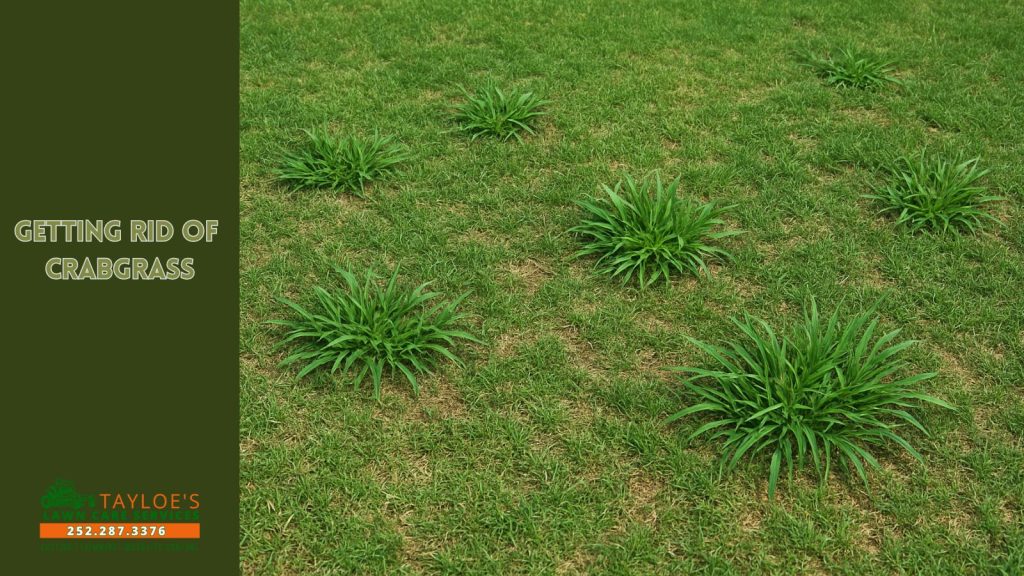
Late winter is the most critical step in your weed control plan. Crabgrass germinates the moment soil reaches roughly 55°F for several consecutive days. In Northeastern NC, this often happens in late February—sometimes earlier during warm winters.
What to apply
Use a high-quality pre-emergent such as prodiamine, dithiopyr, or pendimethalin. These products prevent crabgrass, goosegrass, and many early-season annual weeds from taking root.
What to avoid
Do not fertilize warm-season lawns at this time. They are dormant and cannot use nitrogen yet. Fescue may take a very light feeding, but it is optional and not required for success.
Early spring (March–April): Control cool-season broadleaf weeds
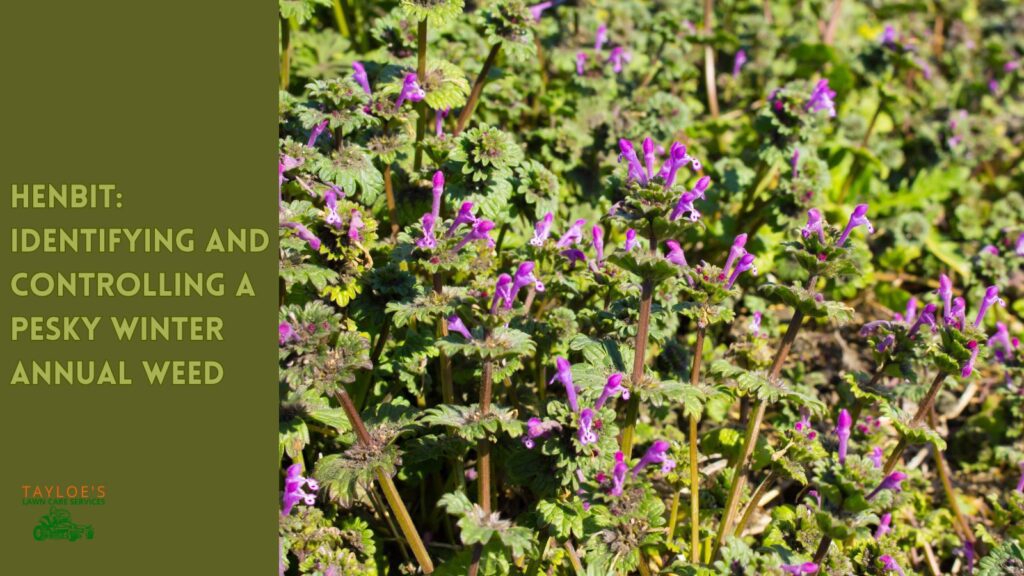
As daytime temperatures rise, early spring weeds begin spreading aggressively. This is when chickweed, henbit, clover, and wild violets make their appearance across many local lawns.
Treatment needs
Use a selective post-emergent herbicide labeled for your grass type. Bagged weed and feed is acceptable only for tall fescue lawns during this window.
Fertilizer guidance
Warm-season grasses should not be fertilized during early spring. They are not fully awake, and early nitrogen can stress them, dull their color, or trigger fungus later in summer.
Late spring (May): Apply second pre-emergent and feed warm-season grass
By May, your warm-season lawn begins actively growing, and the soil is warm enough for it to safely take fertilizer. At the same time, your first pre-emergent from February begins to weaken, which is why the second application is essential for preventing crabgrass breakthrough.
What to apply
Apply your second round of pre-emergent and treat any remaining broadleaf weeds with spot applications.
Fertilizer guidance for each grass type
- Bermuda benefits from medium to high nitrogen.
- Zoysia prefers moderate nitrogen.
- Centipede requires very low nitrogen to avoid damage.
- St. Augustine (coastal areas) responds well to moderate nitrogen.
A note for fescue
Do not fertilize tall fescue in May. Heat is approaching, and fescue must not be pushed with nitrogen at this time of year.
Summer (June–August): Maintain with warm-season feedings and targeted treatments
Summer in Northeastern NC brings heavy humidity, afternoon storms, and peak weed pressure. This season is more about maintenance than major corrective treatments.
Weeds that often appear in summer
- Nutsedge
- Spurge
- Chamberbitter
- Virginia buttonweed
- Crabgrass escapes
Spot-treat these weeds as needed using products labeled for your grass type.
Fertilizer guidance
Warm-season grasses are at their strongest growth stage during summer. Bermuda, Zoysia, and St. Augustine usually benefit from one additional feeding. Centipede typically needs only one feeding for the entire summer.
Cool-season grass warning
Never fertilize tall fescue in summer. Heat plus nitrogen almost always leads to fungal outbreaks or turf decline.
Early fall (September–October): Fall weed control and major fescue feeding
Early fall is the recovery season for lawns. Cooler temperatures and shorter days help turf regain strength and density.
Weed control needs
This is when fall weeds such as clover, chickweed, henbit, and wild onion begin their cool-season growth.
Fertilizer guidance
- Tall fescue receives its most important feeding of the year now.
- Warm-season grasses receive little or no fertilizer depending on species and condition.
This is also the ideal time for fescue overseeding.
Late fall (November): Apply winter pre-emergent and winterizer (fescue only)
Winter weeds begin germinating when soil temperatures fall. Without a winter pre-emergent, your lawn may be filled with henbit, chickweed, rescuegrass, or Carolina geranium by early spring.
What to apply
Use a winter pre-emergent such as simazine or prodiamine.
Fertilizer guidance
Apply winterizer to fescue only. Warm-season grasses must not receive nitrogen in late fall because it interferes with dormancy and increases the risk of winter damage.
Turf-type notes for Northeastern NC
Since turf types behave differently in our climate, your weed and feed schedule must match your specific grass.
Centipede
Centipede requires low nitrogen and only products labeled specifically for centipede safety. It is very easy to over-treat.
Bermuda
Bermuda tolerates more nitrogen and generally benefits from consistent fertilization and weed control.
Zoysia
Zoysia prefers moderate feedings and should not receive nitrogen late in the season.
Tall fescue
Fescue thrives in fall and winter. Its most important feedings occur in September and November.
Key reminder
Soil temperature always overrides calendar dates. A harsh, cold February may delay treatments.
Common mistakes homeowners make
Most weed and feed failures come from a handful of avoidable errors, including applying products too early, too late, or to the wrong turf type.
Mistakes to avoid include:
- Applying weed and feed to dormant warm-season lawns
- Fertilizing tall fescue in late spring or summer
- Skipping the second pre-emergent
- Using herbicides not labeled for your grass
- Treating weeds during drought
- Overlapping chemical applications
- Applying nitrogen before soil warms
- Attempting weed control on mature weeds
- Relying solely on the calendar instead of soil temperature
Avoiding these issues improves your results dramatically.

The Takeaway: The proper weed and feed schedule in Northeastern NC is all about timing
The proper weed and feed schedule in Northeastern NC works best when you match each treatment to soil temperature, seasonal changes, and your lawn’s growth cycle. When you apply pre-emergents, broadleaf control, and fertilizer at the right time, your lawn becomes naturally thicker, stronger, and far more resistant to weeds.
Related Reading:
Author Profile

- Randy Tayloe is the COO of Tayloe's Lawn Care Service, LLC. He is a certified custom applicator, recognized by the North Carolina Department of Agriculture Pesticide Division. A native of Bertie County, NC, and graduate of Bertie High School, he wants to beautify his home county - one yard at a time.
Latest entries
 Lawn CareOctober 5, 2026Signs of lawn disease in NC
- Lawn CareSeptember 29, 2026Lawn care disasters to avoid (especially in our climate)
- Pest ControlSeptember 22, 2026How long do mosquitoes stay active in NC?
- Pest ControlSeptember 16, 2026Getting rid of armyworms