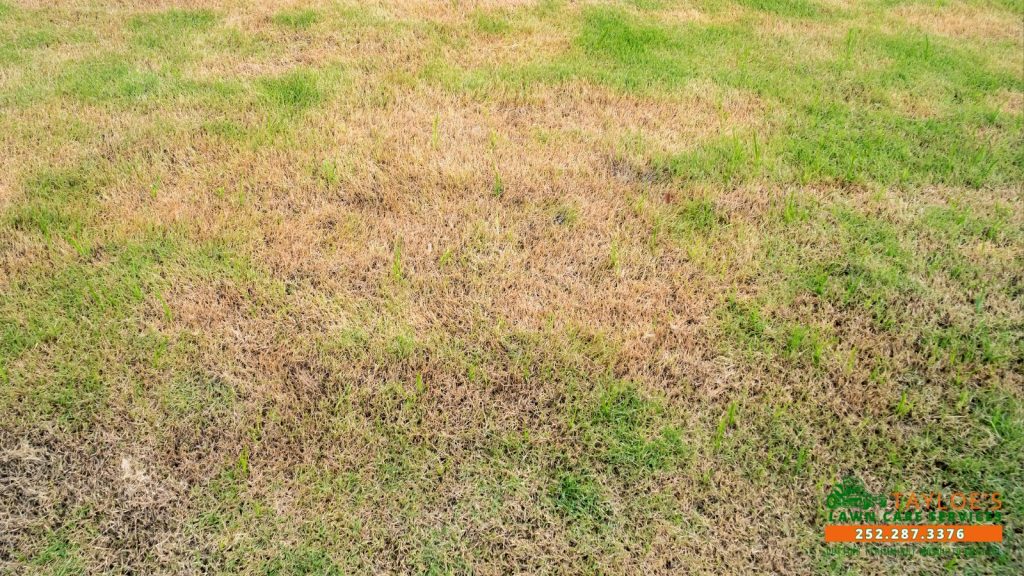
North Carolina drought conditions are worsening so far this summer.
During a North Carolina drought, the goal is not always to keep your lawn green. Sometimes the smarter move is to keep it alive and let it go dormant until better weather returns. If local water restrictions allow watering, an established lawn may need occasional deep watering during a long dry stretch, but shallow daily sprinkling is usually the wrong move.
That brown lawn may look rough from the road, but brown doesn’t always mean dead. Grass can slow down, shut down, and wait out hot, dry weather. The trick is knowing when to help it along and when to stop trying to force summer grass to act like it’s April.
Table of contents
- North Carolina drought conditions are worsening so far this summer.
- The short answer
- Why lawns go dormant during drought
- Should I let my lawn go dormant?
- How much should I water during a drought?
- How do I know if my lawn needs water?
- Should I mow during a drought?
- What about shrubs, flower beds, and new plants?
- Common mistakes homeowners make during a drought
- What Tayloe’s looks for on a property
- Local note for Ahoskie, Murfreesboro, Aulander, and northeastern NC
- When to call a professional
- The takeaway
The short answer
If your lawn is established and drought-stressed, you can usually let it go dormant instead of watering constantly to keep it green. Dormant grass turns brown or tan, grows very little, and looks tired, but the crown and roots may still be alive.
If drought drags on for several weeks with no meaningful rain, some lawns may need a deep watering to protect the turf from permanent damage. That is different from running a sprinkler every evening for ten minutes and hoping for a miracle. Light, shallow watering trains roots to stay near the surface, wastes water, and can make a stressed lawn weaker.
Before watering, check your town, county, or water provider’s current rules. During a drought, local water restrictions matter. If they say no lawn watering, that’s the rule. No lawn is worth a fine or a fight with the water department.
Why lawns go dormant during drought
Grass is a living plant, not outdoor carpet. When the heat cranks up and rain disappears, grass protects itself by slowing down. Cool-season grasses, especially tall fescue, are common in many North Carolina lawns. Fescue can look good in spring and fall, but summer drought can knock the pretty right out of it.
That doesn’t mean the lawn is gone. Dormancy is the plant’s way of conserving energy. It stops pushing fresh green growth because there isn’t enough moisture to support it. The blades may brown up, but the important parts of the plant can still be alive below the surface.
Warm-season grasses, like Bermuda and centipede, handle summer differently, but even they can get stressed when drought and heat stack up long enough. No grass loves being baked, scalped, and ignored all at the same time.

Should I let my lawn go dormant?
For many established lawns, yes, letting the lawn go dormant is better than panicking.
Trying to keep every square foot green during a serious drought can waste water and still produce mediocre results. If the soil is dry, the heat is heavy, and the grass is already stressed, forcing growth is not always helpful. Sometimes the best lawn care decision is restraint.
When to let the lawn enter dormancy
Letting the lawn go dormant makes sense when:
- The lawn is already established
- The grass has slowed or stopped growing
- Local water restrictions are in place
- You are not dealing with new seed, sod, or newly installed plants
- You are willing to accept a brown lawn for a while
Dormant is not the same thing as abandoned. A dormant lawn still needs common sense. Keep traffic off the worst areas when possible. Don’t park vehicles on stressed turf. Don’t mow dirt-dry grass just because Saturday rolled around and the mower looked lonely in the shed.
North Carolina DEQ gives the same general guidance: a healthy cool-season lawn, such as fescue, can naturally go dormant in summer and may only need watering every three weeks if there has been no rain. NC State Extension also advises allowing established lawns to go dormant during dry spells, with occasional watering every four to six weeks to help protect the turf. That’s the difference between letting a lawn rest and completely abandoning it.
How much should I water during a drought?
If watering is allowed and the lawn truly needs it, water deeply and less often. The goal is to moisten the root zone, not just dampen the top crust of soil.
A good soaking matters more than a little sprinkle. Short, frequent watering usually encourages shallow roots and can leave the lawn more vulnerable. Deep watering helps moisture reach where the roots can use it.
The exact timing depends on your grass type, soil, shade, slope, and weather. Sandy soil dries out faster. Compacted soil may shed water before it soaks in. Shady areas may hold moisture longer than full-sun areas near the road, driveway, or sidewalk.
If the lawn is still actively growing and you are trying to maintain it through dry weather, watch for signs of stress instead of watering by habit. If it is dormant, occasional deep watering during a long dry spell may help prevent permanent turf loss, but only if your local restrictions allow it.
How do I know if my lawn needs water?
A drought-stressed lawn usually gives you signs before it completely checks out.
Look for:
- grass blades that fold or curl
- a dull, bluish-gray cast instead of normal green
- footprints or mower tracks that stay visible
- crispy areas in full sun
- thin spots near driveways, roads, or sidewalks
- soil that is dry several inches down
One of the simplest checks is the footprint test. Walk across the lawn. If the grass stays mashed down instead of springing back, it may be under moisture stress. That doesn’t automatically mean you need to water the whole property, but it does tell you the lawn is struggling.
Should I mow during a drought?
If the grass is not growing, don’t mow just to mow.
During the current North Carolina drought, mowing too short is one of the fastest ways to make a bad lawn look worse. Taller grass shades the soil, protects the crown, and helps hold moisture longer. Scalping drought-stressed grass is like giving a sunburned man a wire brush and calling it skincare.
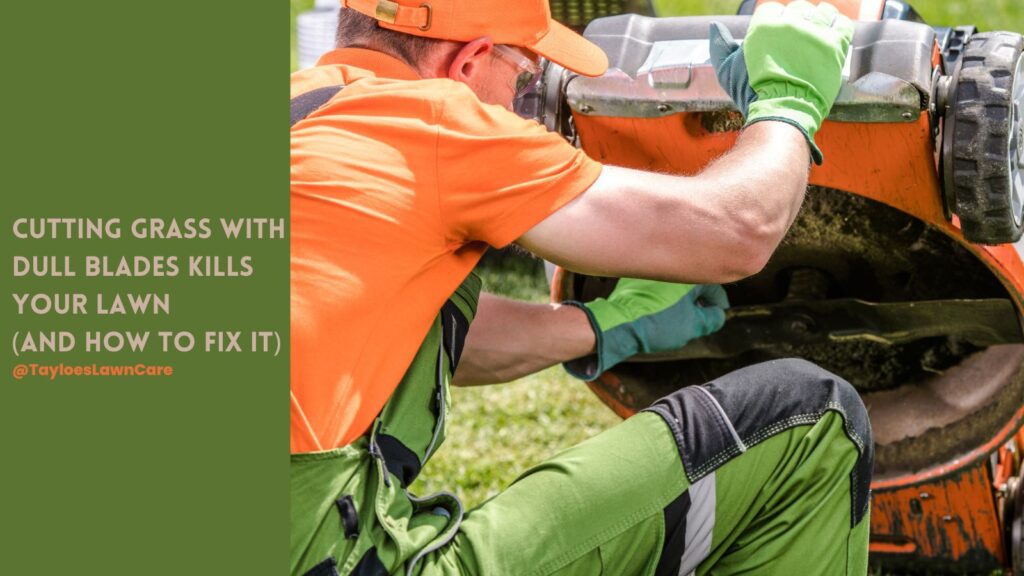
If mowing is needed, mow higher, avoid cutting during the hottest part of the day, and make sure the blades are sharp. Dull mower blades tear grass instead of cutting it cleanly, and torn grass loses moisture faster.
If the lawn has gone fully dormant and growth has stopped, skip the mow until growth returns. Running heavy equipment over brittle, drought-stressed turf can cause more harm than good.
What about shrubs, flower beds, and new plants?
Lawns are one thing. New plants are another.
New shrubs, young trees, fresh sod, new seed, annual flowers, and container plants usually need more attention during drought because their roots are not as established. A mature lawn may be able to go dormant, but a newly planted shrub sitting in hot, dry soil may not get the same grace period.
Mulch can help beds hold moisture and protect roots from heat. Soaker hoses or slow watering can work better than blasting everything with a sprinkler. Water at the base of plants when possible instead of spraying leaves and hoping enough reaches the roots.
Also, don’t assume every brown plant is dead, and don’t assume every green plant is fine. Some plants wilt in the heat and recover later in the day. Others are quietly declining below the surface. That is where a little observation goes further than panic watering.
Common mistakes homeowners make during a drought
The biggest mistake is shallow watering every day. It feels productive, but it usually isn’t. A few minutes of surface watering can evaporate quickly and never reach the roots.
Another mistake is mowing too low. Many homeowners cut grass short because they think it will buy them more time before the next mowing. In drought conditions, the soil can expose soil, increase heat stress, and make the lawn struggle harder.
Fertilizing drought-stressed turf is another bad idea. Fertilizer pushes growth, and growth requires water. If the lawn is already under stress, trying to force it to green up can backfire.
We also see people watering the wrong places. They soak the driveway edge because the sprinkler is misaligned, or they water the sidewalk, like maybe the concrete will finally bloom this year. During a drought, every bit of water needs to count.
What Tayloe’s looks for on a property
When we look at a drought-stressed lawn, we’re not just looking at whether it’s brown. We’re looking at why it’s brown, where it’s brown, and what else is happening around it.
We look at mowing height, soil condition, shade, slopes, drainage, bare spots, weed pressure, traffic patterns, and whether the lawn is established or newly seeded. We also pay attention to the edges near pavement because those areas often cook faster than the middle of the yard.
For shrubs and beds, we look at mulch depth, plant age, signs of heat stress, pruning history, root competition, and whether the plant is sitting in full sun without much help. Sometimes the problem is drought. Sometimes drought is just exposing a problem that was already there.
Local note for Ahoskie, Murfreesboro, Aulander, and northeastern NC
In northeastern North Carolina, summer lawn care can get ugly fast when heat, humidity, drought, and sandy or compacted soil all pile on at once. A yard may look fine in May and rough by mid-June if the rain shuts off.
Ahoskie, Murfreesboro, Aulander, and nearby rural properties can also have mixed conditions on the same lot. One side may be shaded and holding moisture while the front bakes beside the road. A low area may stay greener while a high, sandy patch turns crispy. That is why one-size-fits-all watering advice can miss the mark.
During drought, the question is not “How do I keep everything perfect?” The better question is, “What actually needs help right now, and what can safely wait?”
When to call a professional
Call a professional when you are not sure whether the lawn is dormant, damaged, diseased, thin from poor conditions, or being overtaken by weeds. Drought stress can make several lawn problems look alike from the porch.
Professional help also makes sense if you have shrubs declining, new plantings struggling, irrigation that does not seem to be helping, or a lawn that keeps coming back weaker after every dry spell. Sometimes the answer is watering. Sometimes it’s mowing height, soil, timing, traffic, drainage, or choosing a better maintenance plan.
Tayloe’s Lawn Care Services, LLC helps homeowners and property owners in Ahoskie, Murfreesboro, Aulander, and nearby northeastern NC communities think through lawn care with real-world conditions in mind. We don’t promise a magic green carpet in the middle of a drought. We look at the property, the season, and what the lawn can realistically handle.
The takeaway
During a North Carolina drought, you do not always need to water your lawn just to keep it green. An established lawn can often go dormant and recover when better weather returns. If watering is allowed and drought lasts long enough, occasional deep watering may help protect the turf, but shallow daily sprinkling, low mowing, and fertilizing stressed grass can do more harm than good.
A brown lawn is not always a dead lawn. Sometimes it is just waiting out a rough season. The smart move is to protect the roots, follow local water rules, reduce stress, and avoid making panic decisions that cost more to fix later.
For help with mowing, seasonal lawn care, shrubs, and practical property maintenance in Ahoskie, Murfreesboro, Aulander, and nearby areas, contact Tayloe’s Lawn Care Services, LLC, at 252.287.3376.
FAQs on Lawn Care During the North Carolina Drought
It usually will, especially if the lawn is established and the grass has gone dormant rather than died. Dormant grass can turn brown and still recover when rain and cooler weather return. If the lawn is crispy, thin, bare, or damaged at the crown, recovery may be limited.
If watering is allowed, deep and infrequent watering is usually better than light daily watering. The goal is to get moisture down into the root zone. Always follow local water restrictions first.
Usually, no. Fertilizer pushes growth, and drought-stressed grass may not have enough moisture to support that growth. It is usually better to wait until the lawn is actively growing again and conditions improve.
If the grass is not growing, there may be no reason to mow. If mowing is needed, keep the mowing height higher and avoid cutting during extreme heat or when the lawn is brittle and stressed.
Yes. New shrubs, flowers, sod, seed, and young trees need more attention because their roots are not established. They may need slow, targeted watering and mulch to help protect the root zone during dry weather.
Related Reading
Author Profile

- Deborah Tayloe is the CEO and co-founder of Tayloe's Lawn Care Services, LLC. She has a B.S.Ed and holds certificates in soil and water management and herbology from accredited programs.
Latest entries
 Herb GardenSeptember 1, 2026What fall vegetables should you grow in NE NC?
- GardeningAugust 25, 2026Best low-maintenance landscaping ideas for NC
- FaunaAugust 4, 2026Should you scoop dog poop before the lawn care technician arrives?
- Trees and ShrubsJuly 28, 2026Fast growing privacy plants that thrive in NC humidity