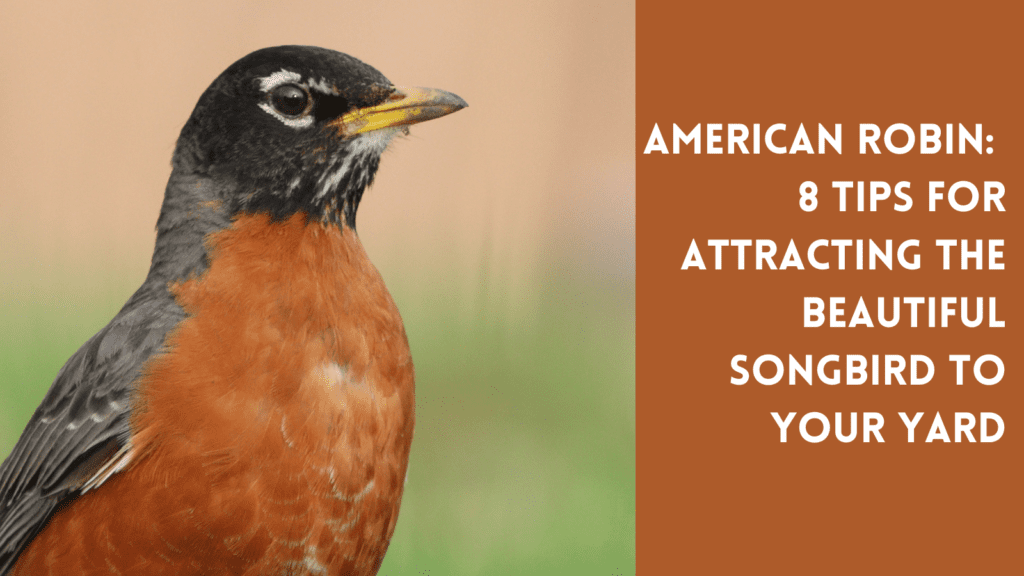
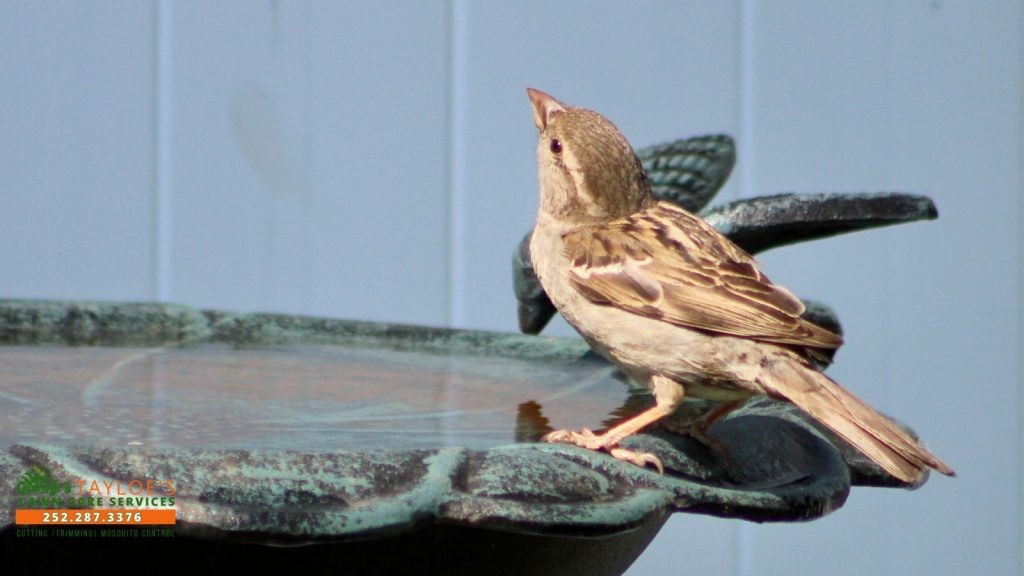
A bird cool down zone supports bird safety in the peak summer heat.
Creating a bird cool down zone is one of the simplest and most rewarding things homeowners can do during hot summers in Eastern North Carolina. Birds face high temperatures, humidity, and heatwaves — especially in July and August. Shade alone isn’t enough. Birds need clean, cool water, safe landing zones, shallow bathing access, and reliable hydration sources to prevent overheating. With just a few basic steps, you can transform ordinary backyards into safe, cooling habitats.
Why birds need cooling zones in summer
Birds overheat faster than we do because:
- Their metabolism runs hotter
- They cannot sweat
- They lose moisture through respiration
When temperatures reach 90–100°F:
- Birds pant heavily
- Feathers fluff to release trapped heat
- Stress increases dramatically
- Dehydration becomes life-threatening
A well-designed cooling zone lowers stress, protects nesting parents, and increases survival rates for fledglings.
Start with shallow, accessible water
The most critical part of a cool down zone is shallow, safe bathing water.
How to set up the ideal water source
- Use a bowl or dish no deeper than 1.5–2 inches
- Place flat stones inside so smaller birds can stand safely
- Keep water clean and changed daily
- Position it in partial shade to prevent overheating
Birds cannot use deep bowls or troughs — they risk drowning. Shallow is safer and dramatically more attractive for bathing.
Keep water clean and cool
Stagnant water grows algae fast in summer. That repels birds.
Maintenance guidelines
- Change water every morning
- Rinse bowls every day
- Scrub weekly with vinegar solution
- Avoid bleach or harsh soaps
Cool water = more visitors.
Create shade that still allows airflow
Solid shade without airflow doesn’t help birds cool down. It traps heat.
Best shade setups
- Place water under a tree canopy or pergola
- Use shade cloth that allows airflow
- Avoid putting water against walls, fences, or buildings
You want shade + air circulation — just like humans prefer a breezy outdoor patio over a sealed, still hot sunroom.
Add multiple shallow water stations
Bird species don’t like crowding each other. A single bowl often attracts aggressive behavior.
Benefits of multiple dishes
- Reduces competition
- Prevents bullying
- Helps smaller birds access water safely
- Spreads out visitor traffic
Rotate stations weekly to keep ants and pests away.
Keep bird feet cool (this really works)
Placing wet gravel or wet sand around the dish gives birds a cool surface to stand on.
How to make it:
- Use a pie tin or container
- Fill with gravel or sand
- Add enough water to dampen, not flood
- Place under shade
Birds will stand here to cool their feet, which helps reduce internal body temperature.
Add a shallow “splash zone” for bathing
Birds bathe to remove dust and perspiration salts. Cool water lowers heat stress.
You can build a bathing area in minutes:
- Use a terracotta saucer
- Fill to less than 1 inch deep
- Place in shade
- Add 2–3 stones as stepping points
Fledglings especially benefit from shallow bathing areas.
Running water attracts more birds and cools better
Birds recognize moving water as safer.
Easy DIY methods:
- Dripper hose over a shallow pan
- Solar fountain pump
- Rock bubbler, placed above a dish
Moving water:
- Keeps temps cooler
- Improves cleanliness
- Increases drinking and bathing activity
Choose the right location (this matters more than people realize)
Birds won’t cool down if your station is unsafe.
Ideal placement:
- Within 10–15 feet of tree or shrub cover
- Not in the open middle of the yard
- Far from areas where cats can hide and ambush
Birds need escape routes.
Add food that hydrates — not just birdseed
Birds lose a lot of water in the heat. You can hydrate them with food.
Helpful summer bird foods:
- Watermelon (seeds removed)
- Cantaloupe pieces
- Blueberries
- Orange slices
- Mealworms (especially for breeding birds)
Never give salty or sugary food.
Offer dust baths (yes, dust helps them stay cooler)
Birds bathe in dust to remove oils and cool the skin.
Make a dust bath with:
- A shallow dish or tray
- Clean sand or sifted soil
- Full sun or partial shade
Dust baths reduce mites and help birds thermoregulate.
Signs birds are overheating — and how to help
Look for:
- Rapid open-mouth breathing (panting)
- Wings held slightly open
- Lethargic perching
A good cool down zone reduces these symptoms quickly.

A bird cool down zone protects your feathered friends from summer heat and brings beauty to your yard
Creating a bird cool down zone is simple, inexpensive, and incredibly helpful for birds in Eastern North Carolina’s summer heat. Shallow water, shade with airflow, multiple stations, and hydrating foods help birds avoid overheating, dehydration, and stress. With just a few thoughtful features, your yard becomes a safe sanctuary for the entire season — and you’ll enjoy watching healthier, happier birds all summer long.
Does the hot summer weather make you long to stay indoors? We’re ready to provide weekly lawn care; text me at 252.287.3376.
Author Profile

- Deborah Tayloe is the CEO and co-founder of Tayloe's Lawn Care Services, LLC. She has a B.S.Ed and holds certificates in soil and water management and herbology from accredited programs.
Latest entries
 Herb GardenSeptember 1, 2026What fall vegetables should you grow in NE NC?
- GardeningAugust 25, 2026Best low-maintenance landscaping ideas for NC
- FaunaAugust 4, 2026Should you scoop dog poop before the lawn care technician arrives?
- Trees and ShrubsJuly 28, 2026Fast growing privacy plants that thrive in NC humidity