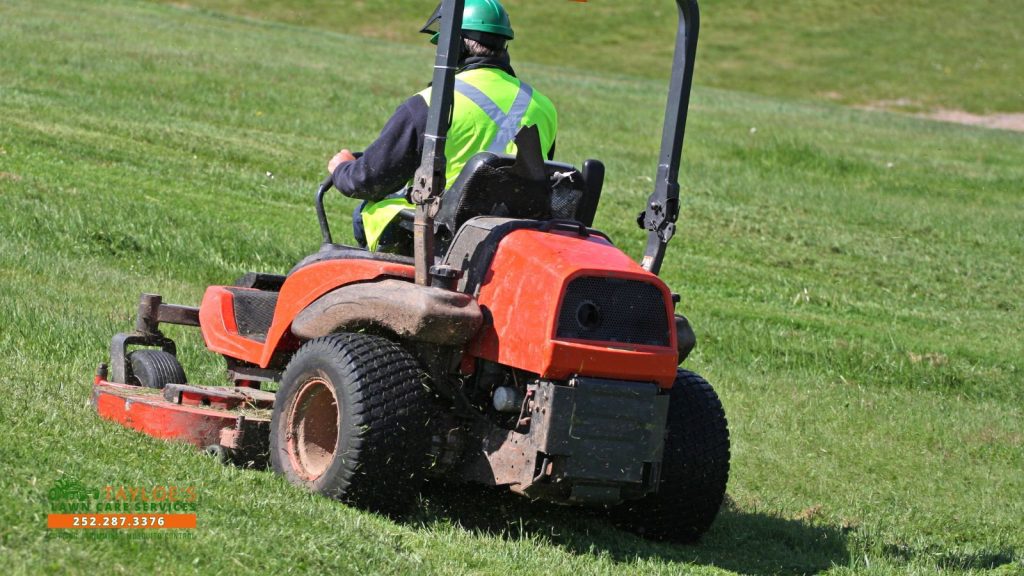
Here are some common mowing height pitfalls to avoid.
Many homeowners discover mowing height mistakes only after their lawn turns yellow, looks stressed, or becomes invaded by weeds. In Eastern North Carolina, mowing height matters more than most people realize because it directly affects root depth, moisture retention, heat tolerance, and disease resistance. If your mower is set just a little too low — or if the height changes throughout the season — your lawn may struggle even with good watering and fertilization.
Below is a practical guide to help you choose the correct mowing heights for your grass type, prevent turf stress, and avoid the most common mowing errors we see in our region.
Why mowing height matters more than you think
Grass doesn’t just “look shorter” when you mow low — it becomes biologically weaker.
The leaf blade acts like the plant’s solar panel: it collects energy and produces food for the roots. When homeowners cut too aggressively, the lawn loses the energy it needs to repair heat damage, fight disease, and stay green.
Shorter grass = shallower roots.
Shallower roots = increased stress in summer.
This cycle explains why many NC lawns develop thin or yellow patches after mowing too low.
The biggest mowing mistake: Set it once and leave it there all year
Grass needs different mowing heights depending on the season.
During the cooler growing months, shorter mowing may not cause much stress. But as soon as summer heat arrives, low mowing exposes crowns (where new blades form) — and in June and July, exposed crowns burn.
The safest approach is adjusting the mower seasonally:
- Slightly higher in summer to shield crowns
- Slightly lower in spring to stimulate thickness
A fixed summer height leads to fewer problems than sharp changes week-to-week.
Mowing heights for NC lawns
Different grasses perform differently in heat, humidity, and soil conditions. Here’s what works best in our region:
Bermuda
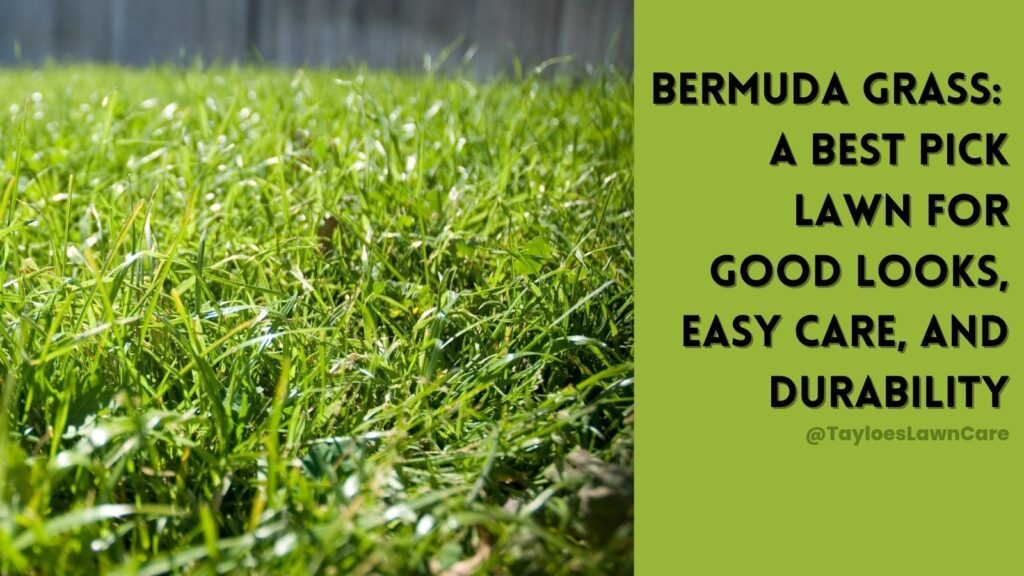
Bermuda can handle shorter mowing, but thrives best when kept 1–2 inches high. In the July and August heat, raising slightly toward the upper end helps reduce stress.
Zoysia
Zoysia prefers 1.5–2.5 inches. Too short, and it becomes patchy and weak; too long, and it traps moisture in humidity.
Centipede
Centipede is happiest between 1.5–2 inches. Cutting lower can weaken it quickly and invite weeds.
Tall Fescue (shady lawns or mixed turf)
Fescue requires much more blade surface to stay healthy, especially in Eastern NC’s summer.
Keep it at 3–3.5 inches to protect roots and prevent fungal disease.
These height ranges matter because each species has a different tolerance for light, heat, and moisture stress.
Cutting too much at once shocks the lawn
Another mowing height mistake NC homeowners make is removing a large amount of growth in one go. When grass has gone too long between cuts, taking off too much shocks the plant and can cause yellowing within a day or two.
The golden rule: Never remove more than one-third of the blade at a time.
If the lawn got long because of rain, mow twice over a few days rather than scalping it in one pass.
Mowing low increases weeds, disease, and heat stress
Low mowing exposes soil to sunlight — and weeds thrive in bare soil.
Symptoms of mowing too low include:
- Thin patches
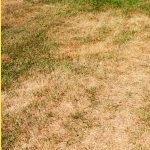
- Yellow areas
- Warm-season grasses go dormant early
- Weeds start filling in faster than the turf
Low mowing also increases the chance for diseases like brown patch and dollar spot during humid summers.
Proper height supports deeper roots, which is the foundation of turf health.
High mowing is better than scalping during the summer heat
If you must choose between cutting slightly too high or slightly too low in July, choose high every time. Taller blades shade the crowns and root zone, slowing evaporation and reducing stress.
This is especially important during dry periods or when watering restrictions are in place.
Avoid uneven mowing heights across the yard
Uneven mower deck leveling can scalp some areas while leaving others thick. This creates inconsistent results and uneven stress on the lawn.
Simple solution:
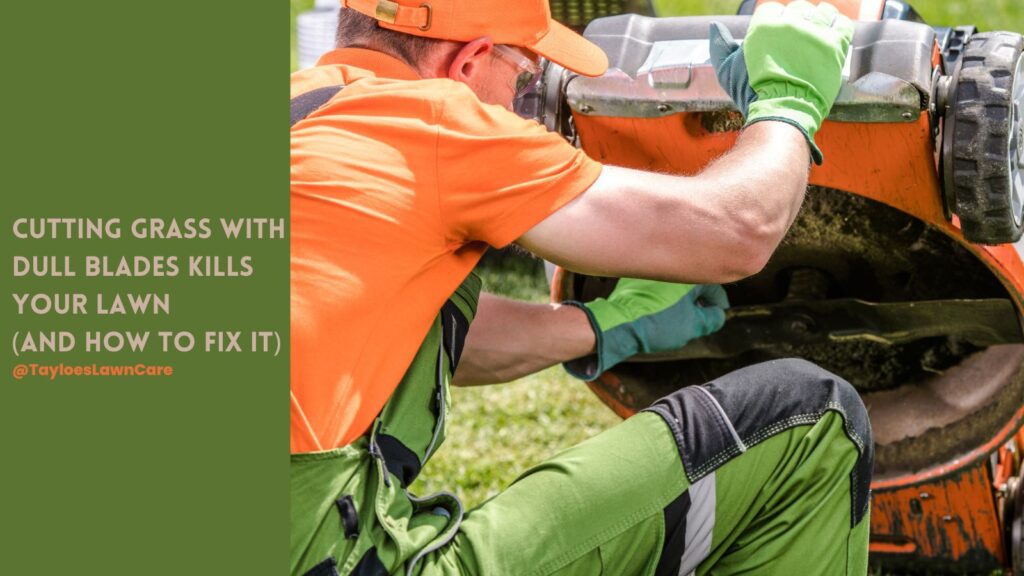
- Check every spring that the mower deck is level
- Make adjustments if one side cuts lower than the other
One quarter-inch difference matters more than most homeowners think.
Raise mower height temporarily during heatwaves
When a heatwave hits, grass shifts into stress-prevention mode. Raising the mower height slightly helps the turf survive.
Even one-half inch higher can:
- Reduce yellowing
- Help roots stay cooler
- Minimize dehydration
- Maintain thicker turf
Heat-sensitive grasses (centipede and fescue especially) benefit from this adjustment.
When height mistakes show up — and how to reverse them
Signs of height problems:
- Yellow tips after mowing
- Scalp marks where soil shows through
- Thin patches in full sun
- Weeds creeping into bare soil
To reverse:
- Raise mowing height
- Water deeply, not daily
- Maintain steady mowing routine
- Avoid fertilizing stressed turf
Most lawns recover within a few weeks with consistent care.

Proper mowing height protects your lawn from summer stress, weeds, and heat damage
The mowing height mistakes NC homeowners make are usually caused by setting the mower too low, cutting too much at once, or failing to adjust height for summer heat. Correct mowing height strengthens turf, deepens roots, reduces weeds, and keeps your lawn greener for longer. With just a few small adjustments, you give your lawn the resilience it needs to thrive even in Eastern North Carolina’s hot, humid conditions.
Author Profile

- Randy Tayloe is the COO of Tayloe's Lawn Care Service, LLC. He is a certified custom applicator, recognized by the North Carolina Department of Agriculture Pesticide Division. A native of Bertie County, NC, and graduate of Bertie High School, he wants to beautify his home county - one yard at a time.
Latest entries
 Lawn CareOctober 5, 2026Signs of lawn disease in NC
- Lawn CareSeptember 29, 2026Lawn care disasters to avoid (especially in our climate)
- Pest ControlSeptember 22, 2026How long do mosquitoes stay active in NC?
- Pest ControlSeptember 16, 2026Getting rid of armyworms