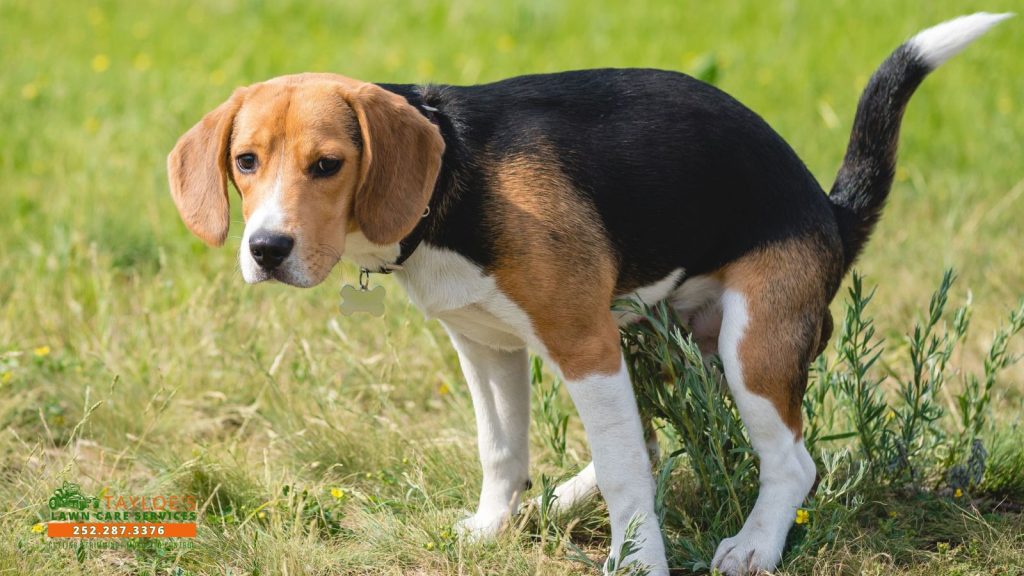
Here’s why it’s a good idea to scoop the poop before we cut your grass.
A surprising number of homeowners search “Should you clean up dog poop before the lawn care technician arrives?” The short answer is yes—absolutely. And while it might feel like a small detail in your busy day, picking up dog waste before your lawn care service arrives protects your pets, your family, your yard, and your lawn crew. It’s a courtesy, yes—but it’s also a matter of health, sanitation, safety, and professionalism.
Let’s talk through why this really matters, what can happen if it’s left behind, and why your technician appreciates it more than you know.
Dog waste isn’t fertilizer — it’s a biohazard
Many homeowners assume dog poop breaks down naturally like manure. Unfortunately, it doesn’t. Dog waste is:
- Highly acidic
- Loaded with bacteria
- Full of parasites that survive in soil
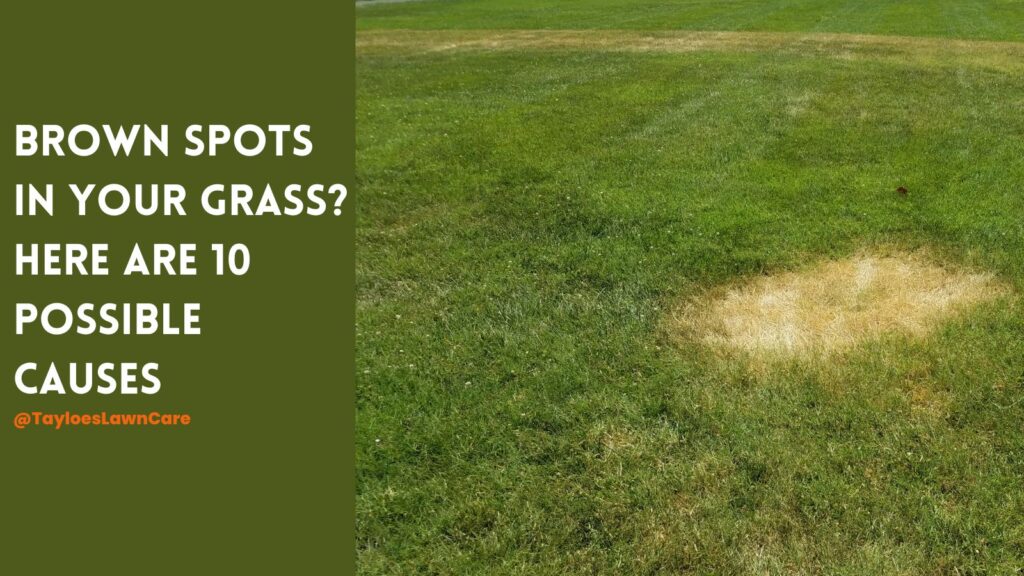
- A leading cause of lawn burn and patchy grass
Unlike herbivores, dogs do not produce nutrient-rich manure. Their waste can kill grass, weaken turf, and contribute to long-term lawn decline.
When technicians mow over it, the impact doesn’t just stay in your yard — it continues wherever the mower travels next.
Parasites and pathogens can spread through the entire yard
Dog waste may contain:
- Roundworms
- Hookworms
- E. coli
- Giardia
- Parvovirus traces (in infected dogs)
- Salmonella
When a mower passes over uncollected dog poop, it can aerosolize tiny particles and spread pathogens through:
- Grass clippings
- Tires
- Footwear
- Underside of the mower deck
This creates a contamination risk not only for the technician, but for other pets and people who use the yard.
Dog poop attracts flies, pests, and lawn-eating insects
Leftover waste draws:
- Flies
- Beetles
- Parasite larvae
- Rodents (yes, really)
These pests don’t stay politely in one area—they spread. And because we service many lawns back-to-back, anything stuck to equipment travels with us unless we stop and disinfect everything thoroughly.
That’s why this becomes a health and sanitation issue faster than people expect.
Cleaning up prevents disease transmission between properties
A reputable lawn company takes sanitation seriously. Still, the more dog waste our teams encounter, the harder it becomes to guarantee a clean, disease-free work environment from yard to yard.
If a lawn tech unknowingly steps in poop containing roundworms or hookworms, those eggs can be carried into:
- The next yard
- Their own yard
- Or worse, their own home
Keeping your yard clean protects:
- Your pets
- Neighboring pets
- The lawn technician
- Families whose lawns we service afterward
It’s truly a public health courtesy.
Mowers + dog poop = a disgusting combination
Here’s the part where we allow a little humor, because every lawn tech in the world has lived this nightmare:
When a mower hits a hidden pile, it doesn’t just roll through it.
No — it obliterates it.
And what happens next is… well… let’s paint the picture gently:
- It cakes onto the tires
- It smears into the treads
- It flicks under the deck
- It sprays onto clippings
- And worst of all:
It makes the entire trailer smell like a giant hot dog biscuit for the rest of the day
That means every yard afterward becomes a little stinkier for the team.
It’s funny, but also serious:
Cleaning dog poop takes significant time, equipment, sanitation, and sometimes even delays other customers.
Poop can damage equipment and increase service time
Dog waste is sticky, heavy, and surprisingly abrasive once it mixes with clippings and dirt.
It can:
- Clog mower decks
- Build up behind the wheels
- Get embedded in gear and belts
- Require full wash-downs to prevent corrosion
Stopping to clean equipment between yards slows routes and increases labor costs—something we always try to avoid.
Your technician’s safety matters
Lawn technicians deserve a safe working environment, just like any other professional.
Dog waste left in the yard creates hazards such as:
- Slip hazards (wet waste on slopes is dangerous)
- Bacterial exposure
- Increased risk of parasites
- Contamination of personal clothing and shoes
Removing waste ahead of service keeps the work predictable and safe.
Your lawn actually benefits when the yard is clean
When waste is removed routinely:
- Grass stays greener
- Soil stays healthier
- Fungal pressure decreases
- Flea populations reduce (they love shady poop areas)
- Odors disappear
- Bare patches caused by acidity heal faster
A clean lawn = better mowing results + better appearance.
A simple rule that helps everyone
If your dog uses the yard, here’s the best practice:
Pick up waste 24–48 hours before your scheduled lawn service.
This keeps everything sanitary and ensures the lawn can be serviced without interruption. For busy households, a dedicated dog-waste pickup day or using a pooper-scooper service can help.

Yes, please pick up dog poop — your lawn, your pets, and your lawn crew will thank you
Should you clean up dog poop before the lawn care technician arrives? Yes — for health, safety, sanitation, lawn quality, and simple courtesy. Dog waste spreads parasites, attracts pests, damages turf, and makes equipment dirty and smelly. Removing it ensures a cleaner, safer environment for pets, people, and your lawn care team. A little effort on pickup day goes a long way toward a healthier yard and a happier tech.
If you need a hand with your lawn care needs, send us a text to 252.287.3376.
Author Profile

- Deborah Tayloe is the CEO and co-founder of Tayloe's Lawn Care Services, LLC. She has a B.S.Ed and holds certificates in soil and water management and herbology from accredited programs.
Latest entries
 Herb GardenSeptember 1, 2026What fall vegetables should you grow in NE NC?
- GardeningAugust 25, 2026Best low-maintenance landscaping ideas for NC
- FaunaAugust 4, 2026Should you scoop dog poop before the lawn care technician arrives?
- Trees and ShrubsJuly 28, 2026Fast growing privacy plants that thrive in NC humidity