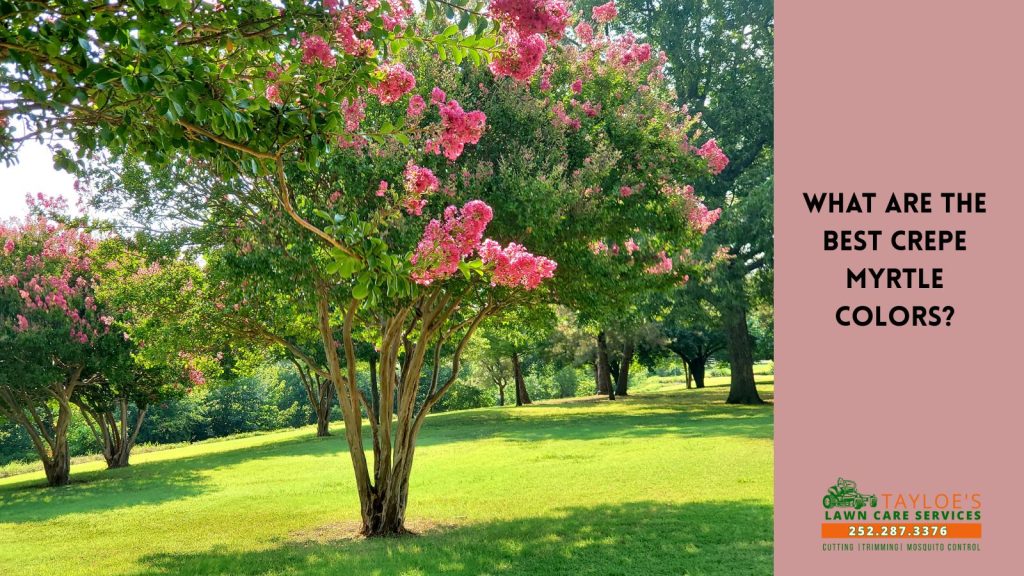
So many beautiful crepe myrtle colors to choose from!
Crepe myrtles bring stunning color to lawns throughout Eastern North Carolina, and choosing the right shade can make a big difference in your landscape’s curb appeal. When homeowners ask what the best crepe myrtle colors are, the honest answer is that the best choice is whichever color complements your home, your personal taste, and the overall layout of your outdoor space. Rather than having one “correct” answer, selecting the right crepe myrtle color means understanding how each shade performs, how long it blooms, and how it interacts with the surrounding landscape.
This guide walks you through the main crepe myrtle color families, highlights the most popular cultivars, and explains which colors work best in specific design situations.
Why color matters when choosing a crepe myrtle
Crepe myrtles are prized for their long bloom period, sometimes flowering from late June through September. The color you choose makes a visual impact for months, so choosing wisely means you’ll enjoy that impact all season long.
When determining the best crepe myrtle color for your landscape, consider:
- The color of your home’s brick or siding
- Whether you want a standout focal point or a subtle backdrop
- Whether the tree will be close to entrances or windows
- What other nearby plants and shrubs look like
Matching the color to your landscape is not only an aesthetic choice — certain colors stand out more from a distance, while others blend naturally into garden beds.
Understanding the main color families of crepe myrtle
Crepe myrtles come in several primary bloom colors. Each has its own personality, ranging from soft and calming to bold and dramatic.
Red
Red crepe myrtles create a bold, eye-catching contrast. They look particularly stunning against light siding colors, brick homes, and neutral-toned buildings.
Popular red cultivars include:
- Dynamite (deep true red)
- Red Rocket (fast growth, vivid red)
- Apache (rich red for smaller trees)
- Cherokee (compact size, red-magenta tones)
Red varieties catch attention even from far away, making them ideal for focal points such as driveway entrances, large corner plantings, or centerpieces in a front lawn bed.
Pink
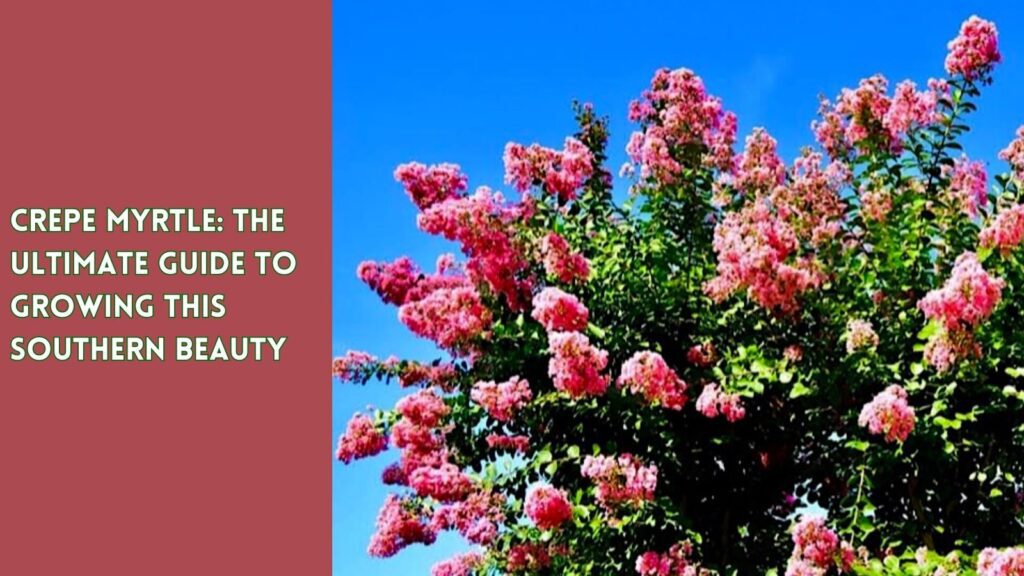
Pink crepe myrtles range from pastel blush to hot magenta. They offer a cheerful, welcoming appearance that pairs beautifully with cottage or traditional landscaping.
Popular pink cultivars include:
- Sioux (medium pink, excellent mildew resistance)
- Pink Velour (deep pink, burgundy foliage early in season)
- Muskogee (soft lavender-pink; long blooming)
Pink varieties complement warm-colored homes and blend well with foundation shrubs such as azaleas, loropetalum, and hollies.
White
White crepe myrtles give a clean, fresh, elegant appearance. They brighten shady areas and flatter darker exteriors.
Popular white cultivars include:
- Natchez (semi-weeping, elegant, long bloom cycle)
- Acoma (smaller, compact white blooms)
- Kiowa (large clusters, crisp white color)
White works well when you want color that stands out without clashing against surrounding plants.
Purple
Purple crepe myrtles have a regal, dramatic look and create a cool-toned pop of color during summer heat.
Popular purple cultivars include:
- Twilight (deep purple, very large blooms)
- Catawba (medium-sized tree, rich purple)
- Royalty (long bloom period, blue-purple undertones)
Purple harmonizes well with landscapes containing ornamental grasses, blue fescue, or lavender.
Lavender
Lavender varieties are softer and more subtle than deep purple. They bring a calming presence to beds and borders.
Popular lavender cultivars include:
- Muskogee (pink-lavender blend; one of the longest bloomers)
- Tonto (lavender pink, mildew resistant)
- Biloxi (soft lavender; tall, graceful)
These pair beautifully with white siding, stone facades, or light-colored brick.
Coral/Watermelon
These unique shades sit between pink and orange, offering warmth and glow.
Common cultivars:
- Tuscarora (coral watermelon shade; extremely popular)
- Hopi (soft coral pink)
- Comanche (coral tones; compact tree)
Coral shades look especially beautiful in landscapes with golden or green foliage accents.
Which crepe myrtle colors stand out the most?
Best for bold visual impact
- Red (Dynamite, Red Rocket)
- Deep purple (Twilight)
These colors command attention and create a dramatic focal presence.
Best for elegance and refinement
- White (Natchez, Acoma)
- Soft lavender (Biloxi)
These pair particularly well with brick homes, porches, and classic landscaping.
Best for variety and versatility
- Medium pink (Sioux, Pink Velour)
- Coral (Tuscarora)
These blend well with most homes and landscapes.
Which crepe myrtle colors last the longest?
Bloom longevity varies by cultivar more than by color, but certain varieties are well-known for extended flowering in Eastern NC.
Long-blooming options include:
- Muskogee (lavender-pink; extremely long bloom period)
- Natchez (white; often blooms through September)
- Tuscarora (coral; reliable reblooming)
These provide color well into late summer.
How bark and foliage affect color selection
Crepe myrtles also offer impressive bark colors and textures once they mature. When choosing bloom color, consider how bark color contrasts with flowers.
Examples:
- Natchez has striking cinnamon-brown bark that pairs well with clean white blooms.
- Pink Velour has deep burgundy foliage early in the season, creating strong contrast with pink flowers.
- Sioux combines pink blooms with attractive medium-gray bark.
These features matter for winter aesthetics when leaves are gone.
Choosing crepe myrtle colors for your home’s exterior
The right choice depends on what complements or contrasts with your siding and architecture.
Best matches by home type
- Against red brick: white, lavender, pink
- Against vinyl siding: red, coral, purple
- Against stone: lavender, white, deep pink
- Contemporary or modern homes: white or deep purple
- Cottage or traditional: medium pink or coral
Coordinating color with surrounding plants creates balance rather than visual overload.
Selecting crepe myrtle colors based on tree size
Crepe myrtles vary dramatically in height—from dwarf shrubs to 30-foot trees.
- Smaller yards may do best with pinks and corals in dwarf or mid-range sizes.
- Large open spaces benefit from deep red, white, or purple on full-size varieties.
Color is amplified by scale, so a large tree with bold color becomes a centerpiece.
Regional considerations for Eastern North Carolina
Crepe myrtles thrive in our region because of:
- Long summers
- Warm soil temperatures
- High sunlight
To maintain color vibrancy:
- Plant in full sun (6+ hours)
- Avoid excessive shade from buildings or trees
- Maintain good air circulation to prevent powdery mildew
Our soil supports strong bloom production when prepping holes with native soil and compost.
Protecting bloom color against mildew
Some colors become dull when powdery mildew affects foliage.
To maintain color intensity:
- Choose mildew-resistant cultivars like Sioux, Tonto, Natchez
- Improve airflow by proper spacing
- Avoid overhead watering
Healthier foliage always supports richer bloom color.

The best crepe myrtle colors enhance your landscape and fit your style
The best crepe myrtle colors depend on your home style, personal preference, and how the tree will appear within your landscape. Red and purple make dramatic focal points; pink, coral, and lavender blend gracefully into most designs; and white remains a timeless choice for elegant curb appeal. Choosing the right cultivar based on size, bloom duration, mildew resistance, and foliage contrast helps ensure your crepe myrtle remains a beautiful and reliable feature of your lawn for many seasons in Eastern North Carolina.
Do you need help planting crepe myrtles or other ornamental or small trees? Call Tayloe’s Lawn Care Services at 252.287.3376 for assistance or to learn the best times to plant crepe myrtles.
Author Profile

- Deborah Tayloe is the CEO and co-founder of Tayloe's Lawn Care Services, LLC. She has a B.S.Ed and holds certificates in soil and water management and herbology from accredited programs.
Latest entries
 Herb GardenSeptember 1, 2026What fall vegetables should you grow in NE NC?
- GardeningAugust 25, 2026Best low-maintenance landscaping ideas for NC
- FaunaAugust 4, 2026Should you scoop dog poop before the lawn care technician arrives?
- Trees and ShrubsJuly 28, 2026Fast growing privacy plants that thrive in NC humidity