Last Updated on: 2nd December 2025, 11:52 am
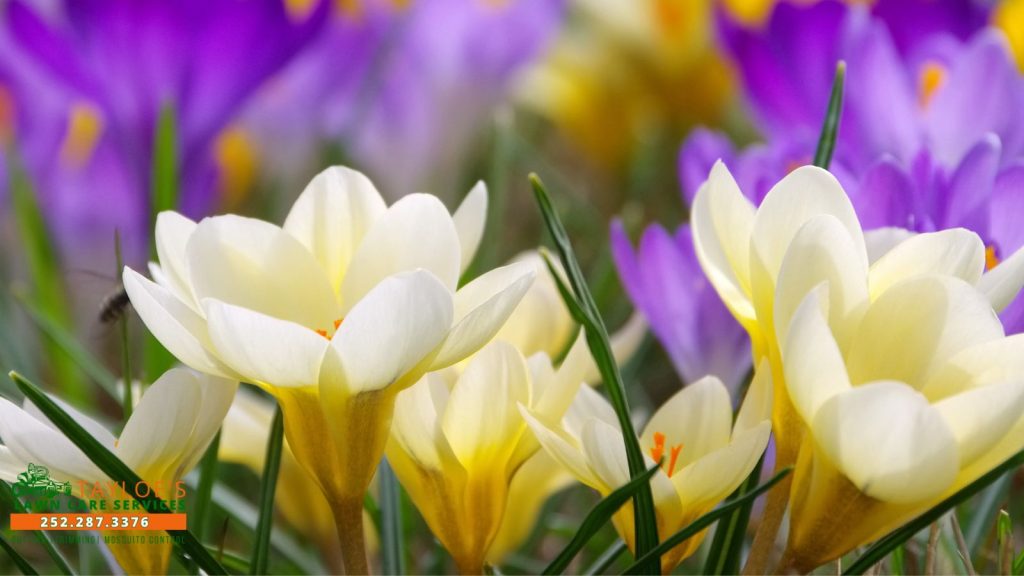
Crocuses are relatively carefree…here’s what you should know.
If you’re searching how to care for crocus flowers because those bright little blooms just popped up in your lawn or garden beds, you’re in good company. Homeowners in Bertie and Hertford counties love crocuses because they are among the first flowers to bloom each year—sometimes emerging while there’s still frost on the ground. Their early color tells you spring is around the corner, and the soil is waking up.
Crocuses are low-maintenance, hardy, and long-lived, but they do benefit from a few simple care steps during and after the bloom period. This guide explains how to care for blooming crocus flowers so they return stronger each year.
Understanding Crocuses in Eastern North Carolina
Crocuses are small, early-spring bulbs that naturalize beautifully in lawns, under trees, and along walkways. They thrive in climates with mild winters and warm springs—making them very well suited for Ahoskie, Windsor, Aulander, Colerain, Murfreesboro, and surrounding towns.
Why crocuses do so well in our region
- They need a winter chill, but not a deep freeze
- Sandy loam soils provide great drainage
- They are drought-tolerant once established
- They multiply naturally without fuss
- They bloom before trees fully leaf out
Even though they’re tough, caring for them correctly helps them bloom more strongly year after year.
Sunlight Needs During Bloom
Crocuses bloom before deciduous trees develop full canopies, so they usually get enough early-season light. But if they’re planted under evergreens or shrubs with dense shade, you may see fewer blooms.
Best lighting for blooming crocus:
- Full sun is ideal
- Part sun also works well
- Avoid deep shade — blooms will be sparse
If your crocuses bloom weakly or unevenly, evaluate the surrounding shade. Even trimming low limbs can improve next year’s show.
Watering Crocus While Blooming
Crocuses don’t require much water during blooming, especially in Eastern NC, where we typically get regular late-winter rainfall.
Watering tips:
- Water only if we enter an unusually dry spell
- Keep soil slightly moist, not soggy
- Never let bulbs sit in pooled water
Crocus bulbs rot easily in wet soil. If you notice standing water in the area, improving drainage will help long-term health.
Fertilizing Blooming Crocus Flowers
Crocus flowers don’t need fertilizer while they are blooming, but they benefit from feeding at the right time of year.
When to fertilize:
- After blooms fade, while foliage is still green
- Use a gentle, balanced fertilizer like 10-10-10
- Sprinkle lightly around the plants—not directly on the bulbs
Because crocuses store energy for next year’s blooms during the weeks after flowering, feeding at the wrong time (fall or mid-winter) does nothing. Feeding after bloom supports stronger bulbs.
Caring for Crocus Leaves After Blooming
This is the step most homeowners overlook—yet it makes the biggest difference.
Do NOT cut the leaves early
The foliage needs to stay in place until it yellows and dies back naturally.
Why?
Because the leaves photosynthesize and send energy back into the bulb. Cutting them too early weakens the bulb, reduces next year’s blooms, and may cause the clump to shrink.
When is it safe to remove foliage?
- When the leaves turn brown
- When they pull away easily
- Typically 4 to 6 weeks after flowering
Patience equals better blooms next spring.
Naturalizing Crocuses in Lawns
Many homeowners love the look of crocuses blooming right through the grass. It’s charming—and easy to maintain if you time mowing correctly.
Lawn mowing rules for crocus:
- Do not mow until the leaves turn yellow
- Set mower height high for the first cut
- Avoid mowing when the soil is very wet
If you mow too early, you cut the leaves before they have fed the bulb.
Dividing and Spreading Crocuses
Crocuses naturally multiply, forming dense clumps after several years. If you notice:
- Fewer blooms
- Crowded foliage
- Smaller flowers
- Clumps spreading unevenly
…it may be time to divide them.
When to divide:
- Late spring or early summer
- After the foliage has died back
- Replant immediately at the same depth (about 3–4 inches)
Dividing crocus bulbs every 3 to 5 years keeps them blooming vigorously.
Protecting Crocus from Pests
Fortunately, crocuses have few pest issues in Eastern NC. They’re deer-resistant, drought-tolerant, and fairly carefree. Still, a few problems can arise:
Common crocus issues:
- Voles nibbling bulbs
- Squirrels digging in beds
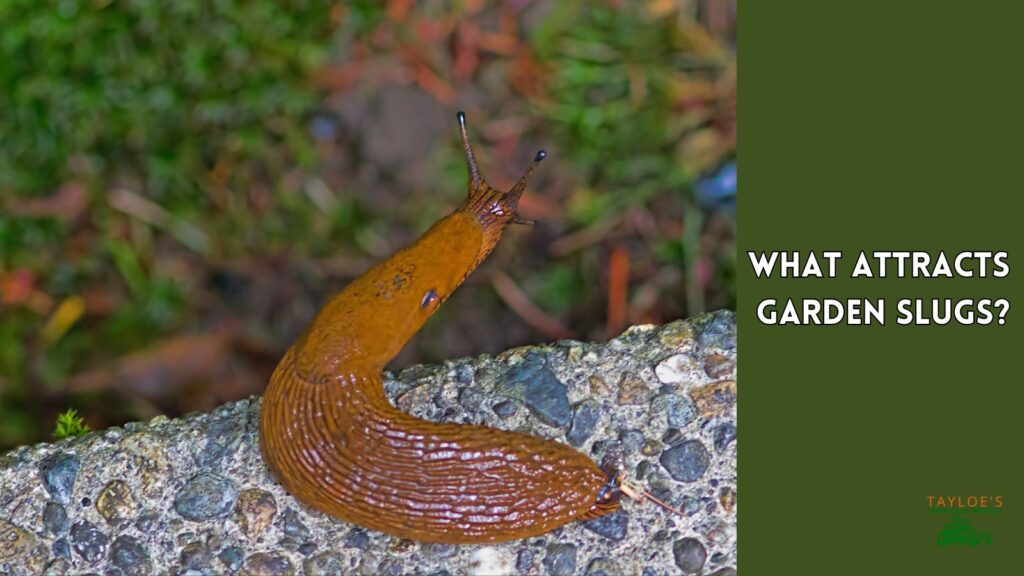
- Slugs eating young blooms in wet springs
Prevention options include:
- Planting bulbs deeper (4 inches or more)
- Adding crushed gravel to the planting hole
- Using mesh bulb cages
- Applying slug bait in damp years
These small steps go a long way in protecting your bulbs.
Where to Plant Crocuses for Best Results
Crocuses do best in spots that warm early in spring.
Ideal crocus locations:
- South-facing beds
- Edges of walkways or driveways
- Under deciduous trees
- Rock gardens
- Naturalized in turf
Avoid low-lying areas or places with poor drainage. Bulbs that remain wet for long periods are far more likely to rot before the next bloom season.
Common Mistakes When Caring for Crocus Flowers
Avoid these common errors to keep your crocuses thriving:
- Cutting foliage too early
- Planting bulbs too shallow
- Overwatering during winter
- Fertilizing at the wrong time
- Disturbing bulbs while foliage is still green
Crocuses reward “gentle neglect” but depend heavily on proper timing.

The Takeaway: Crocus Flower Care Is Effortless
Understanding how to care for blooming crocus flowers helps them multiply, come back stronger each year, and bring early spring color to your lawn or garden. Give them good sunlight, avoid overwatering, leave the foliage until it yellows, and divide as needed—your crocuses will thrive in our mild Eastern NC climate.
If you’d like help improving your garden beds or making your landscape healthier overall, I’d be glad to take a look. Call or text Tayloe’s Lawn Care Services at 252-287-3376 anytime.
Author Profile

- Deborah Tayloe is the CEO and co-founder of Tayloe's Lawn Care Services, LLC. She has a B.S.Ed and holds certificates in soil and water management and herbology from accredited programs.
Latest entries
 Flower GardenFebruary 24, 2026How do I take care of blooming crocus flowers?
- Lawn CareFebruary 3, 2026Lawn care trends to expect in 2026
- Lawn CareDecember 29, 2025Commercial winter lawn care is a must
- GardeningSeptember 27, 2025What perennials, shrubs, and trees don’t like fall pruning (and why)?