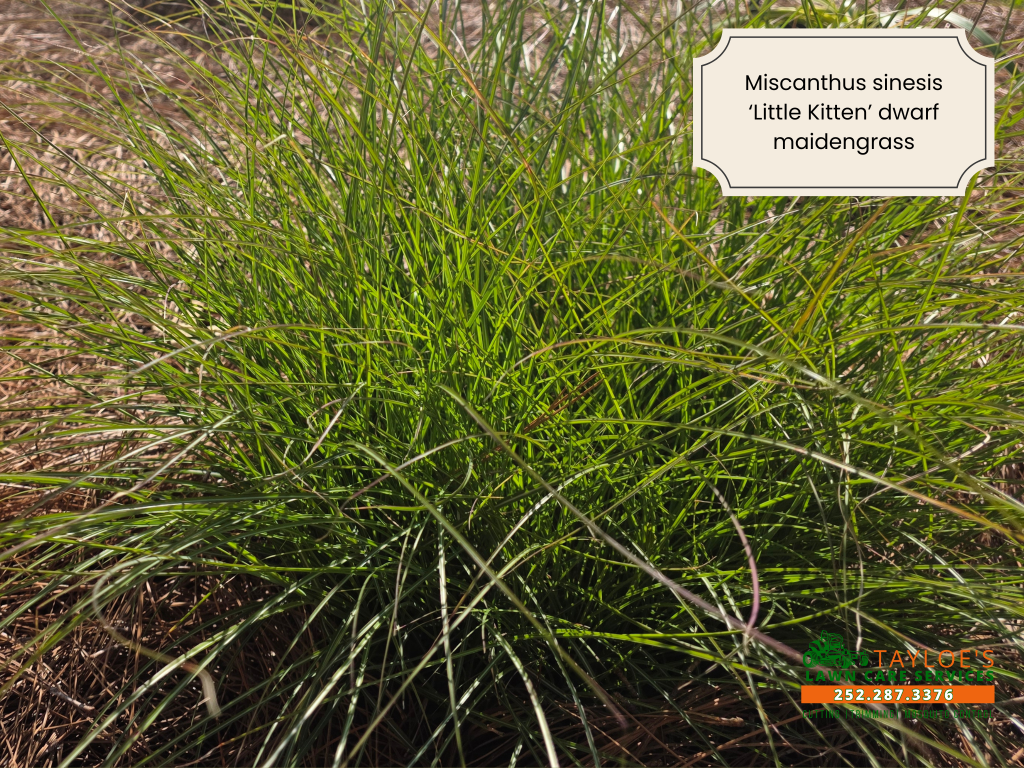
Miscanthus sinensis ‘Little Kitten,’ often called Little Kitten dwarf maiden grass or Little Kitten Miscanthus, is a graceful ornamental grass that brings movement, texture, and softness to the landscape without needing a whole lot of fuss. If you like the airy look of maiden grass but do not have room for one of the larger varieties, ‘Little Kitten’ may be just the right fit.
This compact ornamental grass works well in sunny flower beds, foundation plantings, walkway borders, patio beds, and smaller landscape spaces where a full-size grass would be too large. It has a refined, tidy look, but it still gives that loose, natural movement homeowners love in ornamental grasses.
What Does Little Kitten Dwarf Maiden Grass Look Like?
Little Kitten dwarf maiden grass has narrow, arching green foliage that forms a soft, fountain-like clump. The leaves are fine-textured and graceful, which helps break up heavier landscape plants like boxwoods, hollies, loropetalums, or other dense shrubs.
In the landscape, texture matters more than many folks realize. A bed filled with nothing but broadleaf shrubs can look flat, even when everything is healthy. Adding a fine-bladed ornamental grass gives the eye something different to rest on. It makes the whole planting look more layered and finished.
‘Little Kitten’ is smaller than many other maiden grasses, which is one of its biggest advantages. While some Miscanthus varieties can get tall and wide, this dwarf cultivar stays much more manageable. That makes it easier to use near homes, sidewalks, porches, and smaller planting beds without worrying that it will swallow the space.
In late summer into fall, ‘Little Kitten’ may produce delicate plumes that rise above the foliage. These seed heads add a light, airy look and can remain attractive as the seasons change. By winter, the plant often turns a soft tan or straw color, giving the landscape some structure even after many flowering plants have gone quiet.
Growing Zones for Little Kitten Maiden Grass
Little Kitten dwarf maiden grass is generally grown as a warm-season perennial ornamental grass in USDA growing zones 5 through 9. That includes the Ahoskie, NC area and surrounding neigbors here in eastern North Carolina.
In our part of the South, this dwarf maiden appreciates full sun and well-drained soil. It can tolerate heat and humidity once established, which makes it a practical option for many sunny residential landscapes.
For the best performance, plant it where it will receive at least six hours of direct sun each day. It may tolerate some light afternoon shade, but too much shade can lead to weaker growth, fewer plumes, and a looser shape.
Where to Plant Little Kitten Dwarf Maiden Grass
Little Kitten maiden grass is a good choice when you need a plant that adds softness without becoming the main event. It can be used in several ways around the home landscape:
- As a small accent near a walkway or porch.
- As a repeated plant along a sunny border.
- In mixed beds with perennials and shrubs.
- Near patios where the foliage can move in the breeze.
- Around mailboxes or driveway beds where compact plants are needed.
It pairs nicely with plants like coneflowers, black-eyed Susans, daylilies, sedum, salvia, dwarf hollies, lantana, and other sun-loving landscape plants. Also, it works well in beds where you want a more natural, relaxed look instead of a stiff, formal planting.
Just be sure to give it room to mature. Even dwarf grasses need air flow and space. Planting too tightly may look full on day one, but it can cause crowding later.
How to Plant Little Kitten Maiden Grass
Planting Little Kitten maiden grass is simple, but doing it right from the beginning helps the plant settle in better.
Start by choosing a sunny, well-drained location. Avoid low spots where water sits after heavy rain. Ornamental grasses do not usually like wet feet, especially for long periods.
Dig a hole about twice as wide as the plant’s root ball and about the same depth. Set the plant so the top of the root ball sits level with the surrounding soil. Do not bury the crown too deeply.
Backfill with the soil you removed, gently firming it around the roots. Water the plant deeply after planting to help remove air pockets and settle the soil.
A light layer of mulch around the plant can help conserve moisture and reduce weeds. Keep the mulch pulled back slightly from the crown of the grass. Piling mulch directly against the base can hold too much moisture and may cause problems.
Spring and early fall are both good planting times in northeastern North Carolina. Spring gives the plant a long growing season to establish. Early fall can also work well, as long as the plant has enough time to root in before cold weather.

Caring for Little Kitten Maiden Grass
Once established, Little Kitten dwarf maiden grass is considered a low-maintenance plant. That is one reason ornamental grasses are so popular in home landscapes. They give a lot of visual value without needing constant attention.
During the first growing season, water regularly while the roots are becoming established. This does not mean keeping the soil soggy. It means giving the plant consistent moisture while it settles in.
After the first season, Little Kitten becomes more drought-tolerant. NC State Extension notes that Miscanthus sinensis grows best in full sun, tolerates drought and deer, and should be cut back in late winter or early spring before new growth begins.
That drought tolerance is helpful in our hot Southern summers, but it does not mean the plant should be ignored during long dry spells. If we go weeks with high heat and little rain, a deep watering can help keep the plant looking better.
Little Kitten usually does not need much fertilizer. In fact, too much fertilizer can make ornamental grasses grow too soft or floppy. If the soil is decent and the plant is growing well, leave it be. Sometimes the best plant care is knowing when not to overdo it.
Is Little Kitten Maiden Grass Deer Resistant?
Little Kitten maiden grass is generally considered deer-resistant. That is welcome news for homeowners in rural areas, wooded neighborhoods, and open properties where deer like to wander through and sample the buffet. The edges of this grass have a texture that makes it unpleasant for deer to gnaw on, unless they’re particularly hungry.
Of course, no plant is completely deer-proof. A hungry deer will eat plenty of things it is “not supposed” to eat. But ornamental grasses are usually lower on their preferred menu than tender annuals, hostas, daylilies, or young shrubs.
For homeowners who have struggled with deer damage, adding deer-resistant plants like ornamental grasses can help reduce frustration and replacement costs.
When to Cut Back Little Kitten Maiden Grass
Do not cut Little Kitten maiden grass back too early in the fall. The tan winter foliage can be attractive, and the plant adds shape to the landscape during a season when many beds look empty.
The best time to cut it back is late winter to early spring, before fresh new growth begins. In the Ahoskie area, this often means sometime before the plant starts actively pushing new green blades.
Use clean, sharp pruners, hedge shears, or hand tools to cut the old foliage down to several inches above the ground. Wear gloves, because ornamental grass blades can be sharper than they look. Once you snip back the old growth, the fresh spring growth emerges cleanly.
This yearly cutback is the main maintenance task. That is about as simple as landscape care gets.
A Note About Miscanthus Creeping into Unwanted Places
Because Miscanthus sinensis can spread by seed in some situations, it is wise to use it thoughtfully. Homeowners should avoid planting ornamental grasses where they may spread into unmanaged areas, ditches, roadsides, or natural spaces.
For some landscapes, native ornamental grasses may also be worth considering. But when planted and maintained responsibly, compact cultivars like Little Kitten can still offer a beautiful, practical option for sunny home landscapes.
A Small Grass With a Big Landscape Purpose
Little Kitten dwarf maiden grass is not flashy, but it does its job beautifully. It softens hard edges, adds movement, gives contrast to heavier shrubs, and brings interest through more than one season.
For homeowners who want a neat, compact ornamental grass that is simple to care for once established, Miscanthus sinensis ‘Little Kitten’ is worth considering. Give it sun, well-drained soil, room to grow, and a late-winter haircut, and it can become one of those dependable plants that make the whole bed look better.
If you are in the Ahoskie, NC area and would like to order Little Kitten dwarf maiden grass or have it installed by our team, call or text Tayloe’s Lawn Care Services at 252.287.3376. We can help you choose the right spot, plant it properly, and give your landscape that soft, finished look without turning your flower bed into a jungle.
Related Reading:
Author Profile

- Deborah Tayloe is the CEO and co-founder of Tayloe's Lawn Care Services, LLC. She has a B.S.Ed and holds certificates in soil and water management and herbology from accredited programs.
Latest entries
 Herb GardenSeptember 1, 2026What fall vegetables should you grow in NE NC?
- GardeningAugust 25, 2026Best low-maintenance landscaping ideas for NC
- FaunaAugust 4, 2026Should you scoop dog poop before the lawn care technician arrives?
- Trees and ShrubsJuly 28, 2026Fast growing privacy plants that thrive in NC humidity