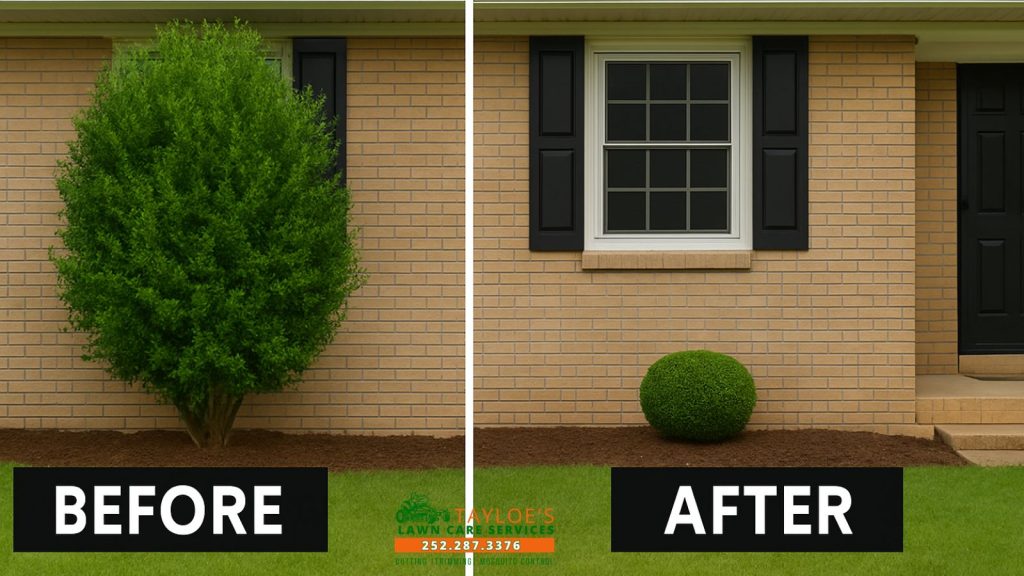
Avoid these landscaping faux pas to maintain good curb appeal.
Many homeowners don’t realize that the most common landscaping mistakes that hurt curb appeal are often simple, avoidable issues — especially here in Northeastern NC. In Bertie and Hertford counties, where yards are spacious, the growing season is long, and humidity encourages rapid plant growth, minor problems can quickly turn into eyesores. Neighborhoods in Ahoskie, Windsor, Colerain, Aulander, Murfreesboro, and Winton rely on curb appeal to set the tone for the entire property. Even small missteps can make a home appear unbalanced, overgrown, or poorly maintained.
Ten Landscaping Choices That Lower Curb Appeal
Below are the 10 mistakes we see most often in small-town landscapes — and the exact steps you can take to correct them and instantly boost the appearance of your home.
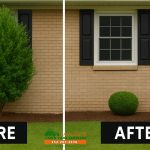
1. Overgrown Shrubs Blocking Windows
Shrubs grow fast in our climate, and most homeowners don’t trim them often enough. Once shrubs rise above the bottom of the window frame or start swallowing porch railings, two things happen immediately:
- The home looks smaller from the street
- The architecture loses definition
- The entire landscape starts to feel heavy and unmaintained
This is extremely common with hollies, ligustrum, loropetalum, and boxwoods — all fast growers in Eastern NC.
Fix:
Trim shrubs so they rest slightly below the windowsill to restore balance. Windows should be fully visible from the street. This one change makes a dramatic difference in curb appeal and lightens the entire appearance of the house.
2. Letting Grass Grow Into Flower Beds
Nothing makes a yard look messier than creeping grass invading your mulch beds. Bermuda and centipede grass are especially notorious for this — and both are prevalent in our region.
When grass overtakes beds, you lose:
- Clean, defined edges
- Visual separation between lawn and landscape
- The polished appearance of a maintained yard
Fix:
Re-edge your beds so the boundary is 2–3 inches deep and clean. Continue edging monthly during the growing season to keep grass runners from creeping back in. A crisp edge is one of the fastest and simplest ways to elevate curb appeal.
3. Using Too Many Different Plants
A yard filled with one-of-everything from the garden center looks cluttered instead of intentional. Homes in small towns often have mismatched plant varieties from years of “adding just one more” every spring.
This leads to:
- Chaotic plant groupings
- Competing textures
- No visual flow
Fix:
Plant intentionally by using groups of 3 to 5 of the same shrub or perennial. Repetition brings unity, creates rhythm, and instantly helps the landscape look professionally planned.
4. Neglecting Mulch or Using Too Little Lowers Curb Appeal
Mulch is one of the most powerful curb appeal tools you have — and one of the most commonly overlooked.
When mulch is faded, thin, or missing altogether, the yard looks:
- Untidy
- Washed out
- Uncared for
Bare soil is especially noticeable in rural areas where erosion and weeds take over quickly.
Fix:
Apply 2-3 inches of fresh mulch once or twice a year. Popular options for Eastern NC include pine bark, dyed brown mulch, and natural hardwood mulch. Always pull mulch away from plant stems to prevent rot.
This one fix alone can transform a yard in under an hour.

5. Placing Plants Too Close Together
Overcrowding is one of the biggest mistakes we see during landscape installs. Homeowners buy plants when they’re young and small, forgetting that mature shrubs often triple in size.
Planting too close leads to:
- Poor airflow (a breeding ground for disease)
- Overlapping branches
- Uneven hedge lines
- Excess shade that prevents blooming
Fix:
Read each plant tag and follow the spacing guidelines based on the mature width, not the size you see in the pot. It takes patience, but the long-term result is healthier plants and a balanced, attractive layout.
6. Ignoring Tree Limb Overgrowth Harms Curb Appeal
Low-hanging limbs make a property look dark, crowded, and smaller. They also:
- Block views from the street
- Reduce air circulation
- Drop debris on walkways and lawns
- Make mowing more difficult
Here in rural NC, many homeowners have pines, pecans, maples, and oaks that grow aggressively.
Fix:
Trim lower limbs in late winter, before spring growth begins. Opening the canopy increases sunlight, improves visibility, and makes the property look cleaner and more inviting.
7. Planting the Wrong Plants for Our Climate
Some plants simply cannot tolerate the heat, humidity, or soil conditions common in Northeastern NC. Planting them leads to constant replacements and a tired-looking landscape.
Examples that commonly struggle here include:
- Hydrangeas planted in full sun
- Azaleas planted in wet, poorly drained soil
- Hostas exposed to direct afternoon sunlight
- Boxwoods planted in low areas with poor air circulation
Fix:
Choose plants that are proven performers in our region, such as:
- Knockout roses
- Lantana
- Loropetalum
- Juniper
- Daylilies
- Hollies
- Crape myrtles
- Coneflowers
- Indian hawthorn
Selecting climate-appropriate plants keeps the landscape looking fresh from season to season.
8. Letting Weeds Take Over Driveway Edges
Weeds along driveways and sidewalks instantly undermine the look of an otherwise neat yard. They:
- Create jagged lines
- Make surfaces look unmaintained
- Encourage grass to creep further into hard edges
This is especially noticeable in rural areas where gravel driveways meet grassy edges.
Fix:
Edge and treat these areas every 2–4 weeks during peak growth months. Clean lines around driveways and walkways dramatically sharpen curb appeal.
9. Neglecting Seasonal Cleanup
Sticks, pinecones, sweetgum balls, and leaf piles accumulate fast in rural NC neighborhoods. When debris sits for weeks:
- The yard looks unmaintained
- Grass underneath becomes thin
- Pests use debris piles as hiding places
Fix:
Spend 15 minutes each week walking the property with a bucket or wagon. Removing small debris consistently prevents overwhelming cleanups later — and keeps the lawn looking manicured year-round.
10. Skipping Symmetry Near Entrances
Front doors and porches look best when there is some level of balance. Even if the entire yard isn’t symmetrical, the entrance should have a sense of structure.
Without symmetry:
- The walkway feels uninviting
- The entry looks mismatched
- The porch appears cluttered
Fix:
Use matching planters, evenly sized shrubs, or mirrored lighting to frame the entrance. Even basic symmetry elevates small-town homes instantly.

Is Your Landscaping Hurting Curb Appeal at Your House?
Avoiding the most common landscaping mistakes that hurt curb appeal can dramatically transform how your home looks — especially in Bertie and Hertford counties, where fast-growing plants and long warm seasons demand consistent attention.
Clean bed edges, fresh mulch, properly spaced shrubs, trimmed trees, and thoughtful plant choices can boost your home’s appearance more than most homeowners realize.
If you ever want help shaping your shrubs, refreshing your mulch, defining bed edges, or transforming a tired yard into something beautiful, our team is always glad to take a look and offer suggestions. Give us a shout at 252.287.3376
Author Profile

- Deborah Tayloe is the CEO and co-founder of Tayloe's Lawn Care Services, LLC. She has a B.S.Ed and holds certificates in soil and water management and herbology from accredited programs.
Latest entries
 Lawn CareNovember 17, 2026Landscaping mistakes that hurt curb appeal in small towns
- BirdsNovember 3, 2026Should you clean birdhouses out in the fall?
- Trees and ShrubsOctober 19, 2026Soft Touch Holly: A compact evergreen for seasonless greenery
- GardeningOctober 12, 2026When can I plant knockout roses in eastern North Carolina?