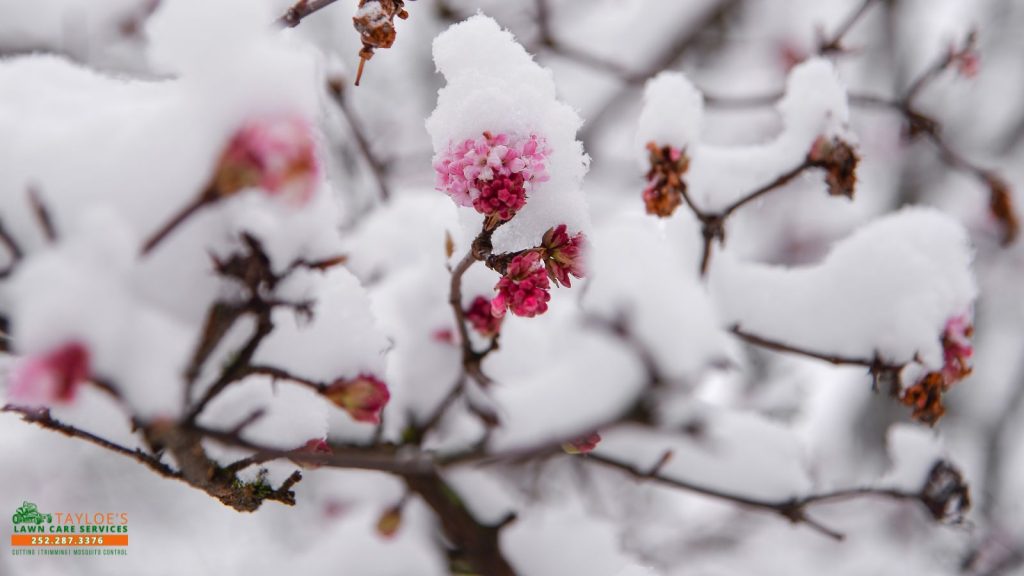
Here’s how to minimize the impact of ice and frost damage.
When you’re repairing your shrubs after frost or ice damage, the first priority is understanding what’s actually harmed, what can bounce back, and what needs hands-on correction. Here in northeastern North Carolina, winter weather is unpredictable. Some years bring mild freezes. Others hit us with thick ice, heavy frost, or sudden temperature drops that leave shrubs brown, cracked, or drooping. The good news? Most shrubs can recover—if you know what to do and when to do it.
This guide walks you step-by-step through assessing the damage, helping plants heal, and avoiding the common mistakes that make winter injury worse.
Understand What Frost and Ice Do to Shrubs
Cold snaps affect shrubs in a few different ways, and knowing which one you’re dealing with helps you decide on the right repair strategy.
Frostburn
A rapid freeze after mild weather causes leaf tips and outer foliage to turn brown or black. This is surface-level damage and usually cosmetic.
Cell rupture
Severe cold or ice causes water inside stems and leaves to freeze and expand, which can split bark and kill tissues. These areas may appear mushy, dark, or brittle.
Weight damage
Ice accumulation bends or breaks branches. This is the most visible type of winter injury.
Root shock
Sudden temperature swings—especially after early warm spells—can stress the root system, slowing the shrub’s spring recovery.
Each type requires its own approach when repairing your shrubs after frost or ice damage.
Step 1: Wait Before Pruning Anything
The biggest mistake homeowners make is pruning too early. It’s tempting to start cutting, but pruning during or immediately after a freeze shocks the plant further.
Why waiting matters
Damaged leaves and twigs often look dead even when the inner tissue is still alive. Give the shrub time to show what will recover.
Best practice:
- Wait until temperatures warm consistently—usually late February to mid-March in our region.
- For heavy ice damage (snapped limbs), you can remove clean breaks immediately, but leave the rest until spring.
Patience protects shrubs from unnecessary cuts while ensuring you don’t remove healthy buds that would rebound.
Step 2: Assess the Damage Correctly
Once the weather stabilizes, you can begin evaluating what you’re truly dealing with.
Scratch test (quick evaluation)
Use your fingernail or a small knife to lightly scratch the bark on a suspect branch.
- Green underneath: Alive — keep it.
- Brown/gray underneath: Dead — prune in spring.
Check flexibility
Live twigs bend. Dead ones snap. Work section by section to map out the shrub’s health.
Look for structural issues
Ice often twists or weighs down branches, causing:
- Split crotches
- Torn branch collars
- Severe leaning
- Uprooting
This tells you whether you can save the plant or if you need structural correction.
Accurate assessment is the backbone of repairing your shrubs after frost or ice damage without wasting time or removing healthy growth.
Step 3: Prune Only What’s Necessary
Once spring growth begins, it becomes clear which parts made it and which didn’t. Now you can prune safely.
What to remove
- Dead branches
- Split branches
- Limbs rubbing or crossing after ice shifted them
- Brown, mushy, or rotten stems
- Outer tips that remain burned
How much to prune
In general, remove no more than ⅓ of the plant in a single season. Heavy pruning after winter trauma can over-stress the shrub.
Proper pruning technique
- Make cuts at a 45° angle
- Prune above a healthy bud
- Avoid leaving stubs
- Follow the plant’s natural shape
Clean, intentional pruning supports regrowth and prevents disease from entering damaged tissue.
Step 4: Help Shrubs Recover with Proper Spring Care
After winter injury, shrubs need support to rebuild strength.
Water consistently
Even if leaves were damaged by frost, roots still need regular moisture in spring. Water deeply 1–2 times per week, depending on rainfall.
Add fresh mulch
A 2–3 inch layer of wood mulch stabilizes soil temperature, helps retain moisture, and protects any weakened roots.
Feed lightly
Use a gentle, slow-release fertilizer suitable for shrubs. Avoid heavy nitrogen applications—they can force soft growth before the plant is ready.
Improve airflow and light
Shrubs recovering from winter stress benefit from extra airflow. Lightly thinning crowded areas helps the plant recover without fungus pressure.
Watch for pests
Weak shrubs attract insects. Keep an eye out for:
- Aphids
- Spider mites
- Scale
Catching issues early prevents further damage.
Spring support is one of the most important phases in repairing your shrubs after frost or ice damage—this is when you help them rebuild their energy.
Step 5: Reshape the Shrub Over Time
Some shrubs bounce back quickly. Others need a gradual recovery plan.
Year 1
Focus on survival and structural integrity. Release the plant from damaged branches and give it the nutrition it needs.
Year 2
Begin shaping and tightening the form. Encourage balanced growth and fill-in.
Year 3
The shrub should regain most of its normal structure and vigor if the root system survived. Shrubs are long-term plants. Recovery is often a process, not an overnight fix.
When to Replace a Frost-Damaged Shrub
Not every plant recovers. Remove and replace if:
- The shrub has more than 50–60% dead wood
- The main trunk is split
- It’s leaning and the root system has lifted
- New spring growth is sparse or uneven
- The plant continues to decline after two seasons
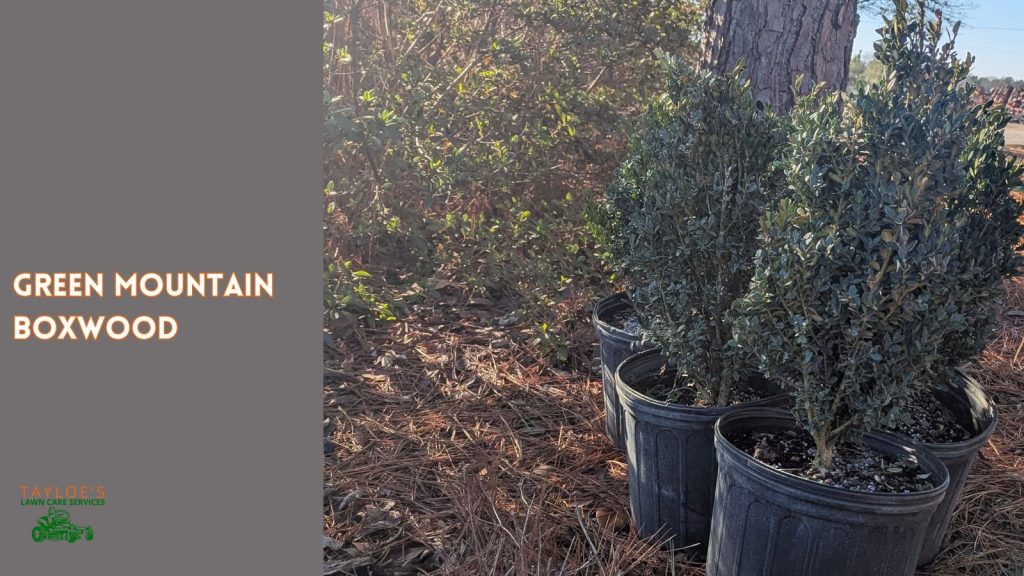
In eastern North Carolina, common shrubs like azaleas, boxwoods, loropetalum, gardenias, and hollies often recover well—but even they can fail after extreme cold, especially young plantings.
If you’re unsure whether your plant can bounce back, I can always take a look and give you an honest assessment.
Preventing Future Frost and Ice Damage
The best fix is prevention. A few simple steps reduce winter injury dramatically.
Water the soil before a freeze
Moist soil holds heat better than dry soil. Hydrated roots resist cold shock.
Add mulch in the fall
Mulch acts as insulation, protecting roots during deep freezes.
Wrap tender shrubs
Use frost cloth—not plastic—to protect young or sensitive shrubs during severe cold snaps.
Avoid late-season pruning
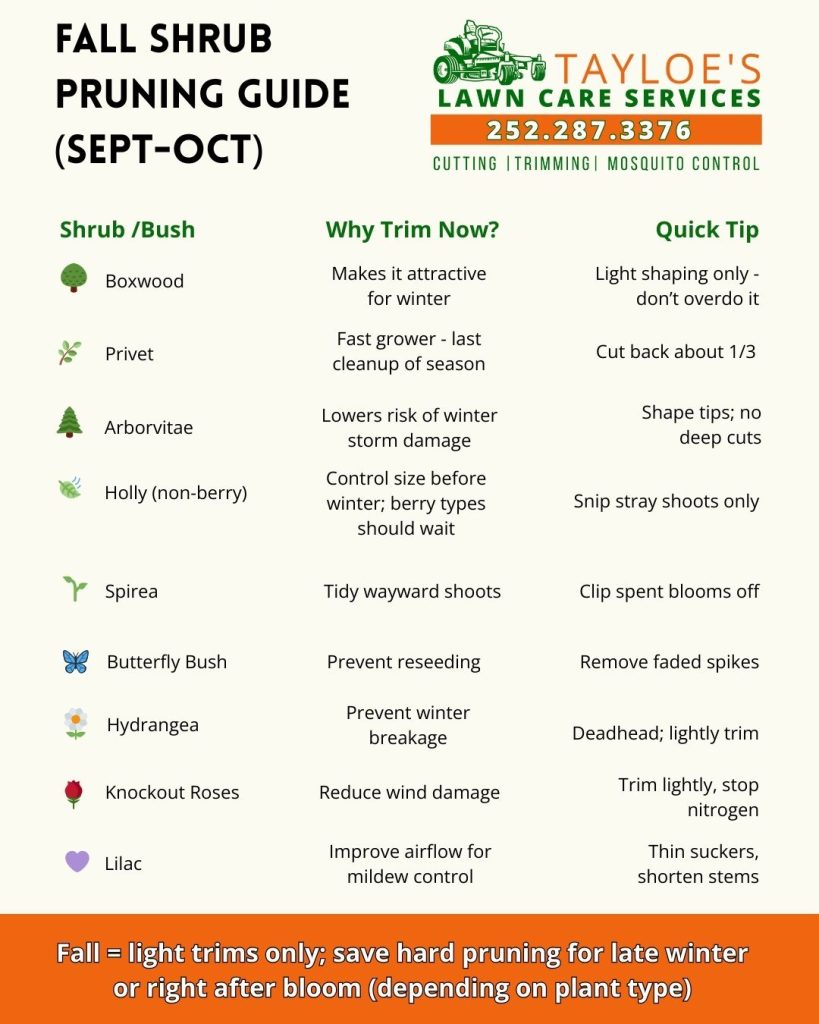
Cutting shrubs in late fall triggers new growth that freezes easily. Stop pruning around early September.
Wash off ice instead of shaking
If ice forms, don’t shake the shrub—it causes more breakage. Instead, gently hose the ice with lukewarm water to melt it slowly.
Plant the right shrubs for the right spot
A shrub planted in a low, wet area or a windy corner will always suffer more winter injury. Proper placement prevents repeated damage.
These practices make future winters much easier on your landscape.
Related Reading:

The Takeaway: Repairing Shrubs After Frost or Ice Damage Is Possible with the Right Know-How
When you’re committed to repairing your shrubs after frost or ice damage, patience and proper timing matter. Wait for true spring warmth, assess carefully, prune wisely, support recovery with steady care, and take steps to prevent repeat damage in the future. Most shrubs in Bertie and Hertford counties can bounce back beautifully with the right approach.
If you want help evaluating your shrubs or need a hand with pruning, shaping, or replacing damaged plants, our team is always available to help or provide you with an estimate.
Author Profile

- Randy Tayloe is the COO of Tayloe's Lawn Care Service, LLC. He is a certified custom applicator, recognized by the North Carolina Department of Agriculture Pesticide Division. A native of Bertie County, NC, and graduate of Bertie High School, he wants to beautify his home county - one yard at a time.
Latest entries
 Pest ControlSeptember 8, 2026Grub & beetle control in NC (what works vs. what doesn’t
- Lawn CareAugust 18, 2026Fall lawn prep starts in August in NC
- Lawn CareAugust 11, 2026Mowing height mistakes most homeowners make
- Weed ControlJuly 28, 2026Why do we spray weeds before weed-eating?