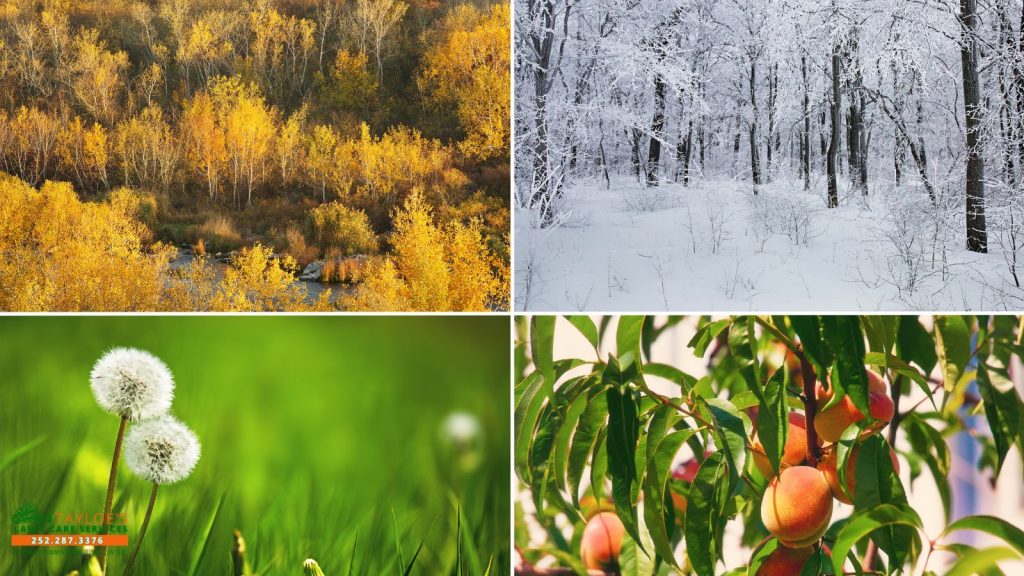
Here’s a season-by-season guide to enjoying a beautiful yard.
Creating a strong year-round lawn care schedule NC homeowners can actually follow makes the entire process easier, more predictable, and far more effective. Here in Bertie and Hertford counties, our climate swings from cold, soggy winters to brutally hot summers, and each season puts different demands on your turf. When you understand what your lawn needs and when it needs it, the results are healthier grass, fewer weeds, and a cleaner-looking yard all year long.
Below is the complete annual schedule we use and recommend locally.
Winter (Dec–Feb)
Winter is the season that sets the tone for everything that follows. Even though your grass is dormant, it still needs the right baseline care to enter spring healthy.
Clean up debris
Leaves, branches, pinecones, and other yard debris trap moisture and block sunlight. That creates ideal conditions for fungus—even in cold weather. Keeping the lawn clear during winter prevents rot, improves airflow, and reduces mold issues that show up once temperatures rise.
Check drainage
Winter rain exposes drainage problems you may not notice in summer. Standing water around low spots, downspouts, or compacted soil means trouble is coming when warm-season weeds wake up. Winter is the perfect time to identify and plan fixes—grading adjustments, small swales, soil amendments, or adding river rock paths.
Light watering only during drought
Dormant lawns don’t need much water, but a long dry stretch can stress the root zone. If we go more than two weeks without rain, give the yard a light drink just to keep roots alive.
Late-winter pre-emergent (February)
This is one of the most critical steps in a year-round lawn care schedule NC homeowners should never skip. Late February is prime time for preventing crabgrass, goosegrass, and other summer annual weeds before they germinate. Missing the window means fighting weeds all summer long.
Light fescue feeding if needed
Cool-season fescue grows slowly during winter, but a gentle, low-nitrogen feeding in late February can help it green up evenly as spring approaches. Avoid anything heavy until fall.
Spring (Mar–May)
Spring is all about preparation. The work you do now determines how well your lawn survives summer heat and drought.
Apply spring pre-emergent
March is the second major weed-prevention checkpoint in a year-round plan. This application stops the late wave of annual weeds and reduces the weed load for the rest of the season.
Sharpen mower blades
Sharp blades reduce stress on grass by giving it a clean cut instead of shredding it. Torn leaf blades lose more moisture and attract disease—two things you don’t want heading into summer.
Begin mowing high
For warm-season lawns like Bermuda and zoysia, mowing high at the start of spring helps the lawn wake up strong after winter dormancy. Taller early-season mowing protects tender growth and encourages deep rooting. For fescue, stick to the higher end of its recommended height range year-round.
Treat winter weeds
Henbit, chickweed, and bittercress thrive during mild NC winters. Treat them early before they set seed. This keeps spring growth cleaner and prevents next year’s winter weeds from exploding.
Check soil pH
Most lawns grow best with a pH around 6.0–6.5. Too acidic, and your fertilizer becomes less effective. Spring is a perfect time to run a quick soil test and apply lime if needed.
Light fertilizing, depending on the grass type
Warm-season grasses begin waking up now, so gentle spring feeding helps with color and early vigor. Cool-season fescue needs very minimal spring fertilizer—save the heavy feeding for fall to avoid fungus in summer.
Summer (Jun–Aug)
Summer is survival season in eastern North Carolina. Heat, humidity, fungus, pests, and drought all hit at once. Staying consistent is the difference between a lawn that thrives and one that barely hangs on.
Deep watering, early morning
Lawns need long, deep soakings—ideally the equivalent of one inch of water per week. Watering early in the morning reduces evaporation, prevents fungus, and helps the soil retain moisture longer.
Avoid nitrogen in fescue
This is crucial. High-nitrogen fertilizer on fescue during summer triggers disease, especially brown patch. Hold off until fall.
Fertilize warm-season grasses
Bermuda, zoysia, and centipede love summer heat. This is their peak growing season, making summer the perfect time for nutrient support. A balanced fertilizer feeds the roots and improves color without overstimulating growth.
Watch for fungus and pests
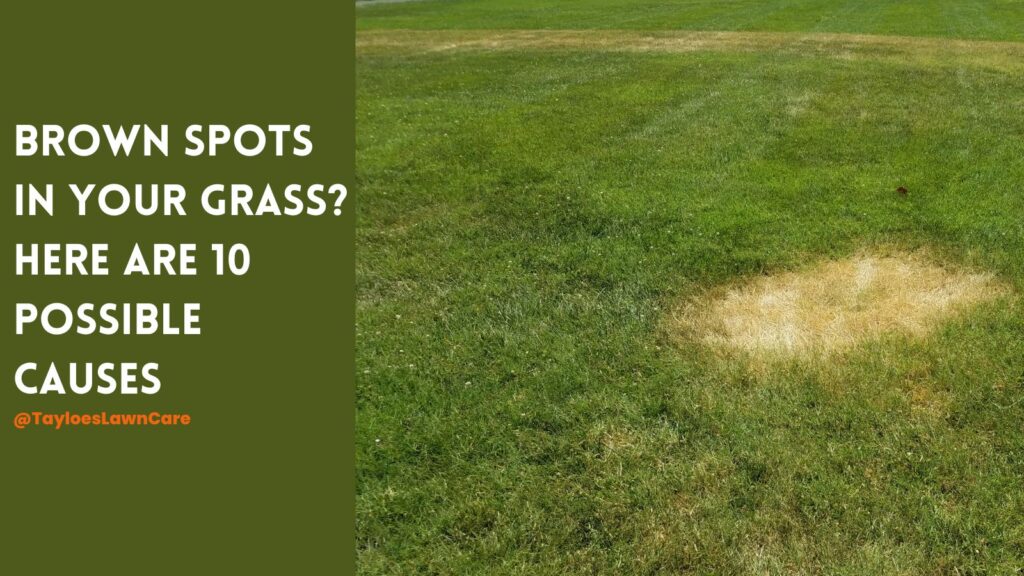
High humidity means fungus spreads quickly. Brown patch, dollar spot, and rust can show up almost overnight. Summer is also prime time for chinch bugs, armyworms, and mole crickets. Early identification makes treatment easier and less expensive.
Raise mowing height
Taller grass shades the soil, reduces water loss, and protects the crown from heat stress. Every grass type benefits from going higher in July and August.
Prevent heat stress with proper watering
Consistency is key—deep and infrequent watering beats short, daily watering every time. If your grass looks bluish or leaves fold inward, it needs a drink.
Fix shade and airflow issues
If parts of your lawn struggle every summer, it may not be your watering—it may be airflow or shade. Trimming low limbs, thinning dense shrubs, or increasing airflow around buildings often solves recurring summer lawn problems.
Fall (Sep–Nov)
Fall is the reset button for your entire year-round lawn care schedule NC homeowners depend on. It’s the most important season, especially for fescue lawns.
Fall pre-emergent in September
A September pre-emergent blocks winter weeds before they take hold. This protects your fall overseeding investment and keeps the lawn clean through winter.
Aerate and overseed fescue
This is the single most important step for fescue in our region. Aeration opens compacted soil, increases oxygen flow, and helps roots spread deeper. Overseeding restores density and repairs all the thin or bare areas that struggled during summer.
Fertilize fescue
Fescue’s main growing season is fall and winter. A high-quality fertilizer applied in September and November drives root growth, thickens turf, and improves spring color.
Clean leaves weekly
Allowing leaves to sit smothers the lawn and traps moisture—the perfect recipe for fungus. Weekly cleanup prevents matting and protects the new fescue seedlings you just invested in.
Repair bare spots
Early fall bare spot repairs have the best chance of rooting deeply before winter sets in. Whether you’re patching with seed or sod, cooler temperatures and steady moisture make fall ideal.
Prepare for winter dormancy
Warm-season lawns begin shutting down in November, and how you treat them now determines their health next spring. A late-fall potassium boost (not nitrogen) strengthens roots and improves cold tolerance.
Related Reading:
The Takeaway: Year-Round Lawn Care Schedule NC
Following a consistent year-round lawn care schedule, NC homeowners can rely on keeping their yards healthier, greener, and far less vulnerable to weeds, fungus, drought, and seasonal stress. With the right timing and a predictable routine, lawn care becomes simpler and more cost-effective—especially here in Bertie and Hertford counties, where our climate demands thoughtful seasonal care.
If you ever want a customized annual plan for your specific yard—or need help with seasonal maintenance—I’m always here to lend a hand or put together an estimate. Call Tayloe’s Lawn Care Services, LLC at 252.287.3376 to discuss your lawn care needs.

Author Profile

- Randy Tayloe is the COO of Tayloe's Lawn Care Service, LLC. He is a certified custom applicator, recognized by the North Carolina Department of Agriculture Pesticide Division. A native of Bertie County, NC, and graduate of Bertie High School, he wants to beautify his home county - one yard at a time.
Latest entries
 Pest ControlSeptember 16, 2026Getting rid of armyworms
- Pest ControlSeptember 8, 2026Grub & beetle control in NC (what works vs. what doesn’t
- Lawn CareAugust 18, 2026Fall lawn prep starts in August in NC
- Lawn CareAugust 11, 2026Mowing height mistakes most homeowners make